At a glance
Porthdafarch is a rocky cove on Holy Island with clear water, excellent snorkelling over the kelp-covered rocky foreshore, and the coastal path to South Stack from the car park. Small, fills quickly in summer; no facilities; dogs welcome year-round. One of the best spots on Holy Island for combining a beach visit with a coastal walk to the seabird cliffs.
About Porthdafarch Beach
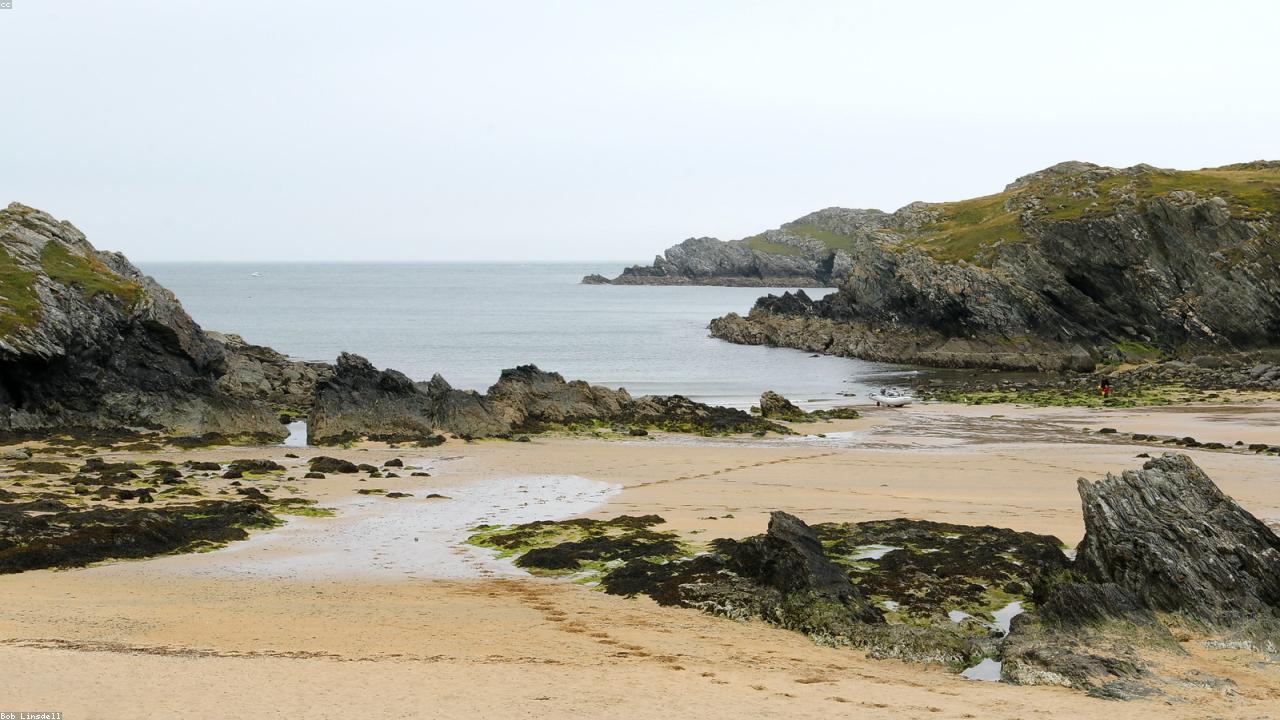
Porthdafarch — the horseshoe harbour — earns its name from the shallow, curved indent it makes in the southern shore of Holy Island, a form that provides enough shelter from the prevailing south-westerly swell to make it one of the calmer coves on this coast. The bay is small and rocky, with the character that makes it appeal to a different kind of visitor from those who seek long sandy beaches: the flat rock shelves, the pools between them, the clear water over the seabed close to shore, and the coastal path that begins above the car park and heads north along the cliff edge towards the lighthouse.
The marine environment at Porthdafarch is among the more accessible on Holy Island. The rocky foreshore — visible from the surface when the water is clear, which is most of the time in settled conditions — holds wrasse, spider crabs, and a range of invertebrates in the kelp beds and crevices. Snorkelling here requires no specialist equipment or training: a mask, a snorkel, and a wetsuit appropriate to the water temperature are sufficient to access a marine world that most visitors to North Wales's beaches never see. The water temperature peaks in late summer at around 15–17°C — enough to swim in, cold enough to benefit from neoprene.
The coastal path from Porthdafarch to Ynys Lawd — South Stack — is one of the finer short coastal walks on Holy Island. The route climbs onto the cliff edge above the cove and follows it north and west, with the sea below and the cliff-face habitat above, to the stepped descent to the South Stack lighthouse and the RSPB reserve. The seabird colonies there — guillemots, razorbills, choughs, peregrines — provide a dramatic endpoint to a walk that begins at a quiet cove where the main sounds are the water and the wind.
Find it on the map
Frequently asked questions
Porthdafarch is a small cove on the south-western shore of Holy Island, Anglesey, approximately 3 miles south of Holyhead town centre via the B4545. The name means "horseshoe harbour" in Welsh, reflecting the bay's sheltered, curved form. It is one of several small coves on the south and west coast of Holy Island that offer clear-water swimming and snorkelling.
Porthdafarch is a small, rocky cove with patches of sand revealed at low tide. The foreshore is predominantly flat rock and boulder, which is the feature that makes it good for snorkelling — the rock pools and kelp beds close to shore hold a variety of marine life. At high tide the rocky character is more pronounced; at low tide the sandy patches are accessible and the pools are at their most explorable. The water is clear and often noticeably green-blue in sunlight.
Yes. Porthdafarch is one of the better snorkelling sites on Holy Island. The rocky foreshore and shallow seabed close to shore support wrasse, small lobster, and a range of invertebrates in the kelp and rock crevices. The clear water provides good visibility in calm conditions. A basic mask and snorkel are sufficient; a wetsuit is recommended even in summer as the water remains cold. This is snorkelling for curious observers rather than experienced divers.
Yes. The coastal path from Porthdafarch follows the cliff edge north and west along one of the finest sections of coastal walking on Holy Island, reaching South Stack lighthouse and RSPB reserve in approximately 2 miles. The path involves some ascent on the cliff sections and is rough in places but well-walked. The combination of the beach, the coastal path, and the seabird spectacle at South Stack makes for an excellent half-day.
A small car park is located at the beach access point. It holds a limited number of vehicles and fills quickly on summer weekends. Arriving before 10am on busy days is recommended to secure a space. Overflow parking along the approach lane is limited and should be done without blocking farm gates or passing places.
The rocky shore and clear water at Porthdafarch support a good range of marine life visible from the surface. Seals are occasionally seen in the bay — grey seals use the quieter coves of Holy Island regularly. Chough, the red-billed crow of Welsh clifftops, is occasionally seen on the rocky headlands above the cove. The coastal path north provides additional wildlife interest, particularly the seabird colonies at South Stack.