At a glance
North Wales has 28 castles including four UNESCO World Heritage Iron Ring fortresses built by Edward I between 1283 and 1295. All four are managed by Cadw and open year-round.
About North Wales Castles
No region of comparable size in Europe has a denser concentration of medieval fortresses than North Wales. Edward I built his Iron Ring — Conwy, Caernarfon, Harlech and Beaumaris — with breathtaking military precision between 1283 and 1295, following his defeat of Llywelyn ap Gruffudd, the last native Prince of Wales.
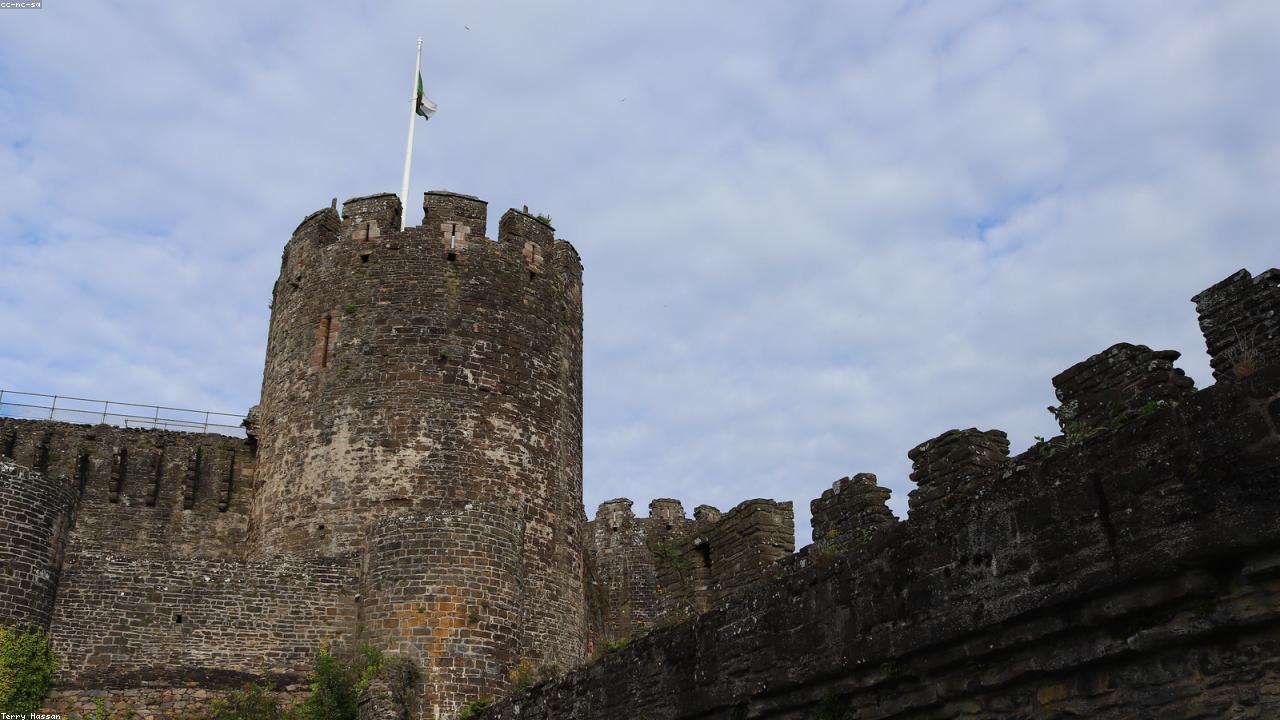
The four Iron Ring castles were collectively inscribed as a UNESCO World Heritage Site in 1986 alongside the town walls of Conwy and Caernarfon. Caernarfon's polygonal towers and banded sandstone masonry are unique in Britain; Harlech sits on a near-vertical rock spur 61 m above the plain; Beaumaris — never fully completed — is considered the most technically perfect concentric castle ever built; Conwy's circuit of eight towers and 22 flanking towers remains intact.
Beyond the Iron Ring, North Wales has Chirk Castle (a National Trust property still lived in today, built 1295–1310), Criccieth (a Welsh-built castle later captured by Edward I), Flint (Edward's first Welsh castle, 1277), Dolwyddelan (a native Welsh stronghold in the Lledr Valley), and Dolbadarn at the foot of Llanberis Pass.
Top 8 castles in North Wales
Castles by region
- Snowdonia
- Caernarfon, Harlech, Criccieth, Dolwyddelan, Dolbadarn, Castell y Bere — the highest concentration. All within 45 minutes of each other.
- Conwy & North Coast
- Conwy Castle and its unbroken town walls. Rhuddlan Castle on the Clwyd estuary is also nearby.
- Anglesey
- Beaumaris Castle — a short drive from the Britannia Bridge. Excellent base if combining with Conwy (14 miles via A55).
- Wrexham
- Chirk Castle (National Trust) sits on the Chirk–Llangollen border, 3 miles from the town centre.
- Clwydian Range
- Flint Castle, Rhuddlan Castle and Denbigh Castle all lie along the north-east edge of the range.
Practical information
Opening times
Most Cadw castles open daily March–October (09:30–17:00 or 18:00 in summer). Winter hours are typically 10:00–16:00, Monday–Saturday, closed Sunday. Check cadw.gov.wales for the latest hours before travelling.
Tickets and passes
Buy online in advance to guarantee entry in peak season (July–August). Cadw Explorer Passes (3 days from ~£28 adult, 7 days from ~£42) cover unlimited entry. Annual membership (~£50/adult) covers all Cadw sites across Wales.
Getting there
Conwy Castle is 200 m from Conwy railway station (Llandudno Junction line). Caernarfon is served by buses from Bangor (20 min). Harlech has a railway halt on the Cambrian Coast Line. Beaumaris requires a car or bus from Bangor via Menai Bridge.
Accessibility
Beaumaris is the most accessible — flat moat path and level ground floor. Conwy, Caernarfon and Harlech have steep towers and uneven medieval steps; ground-level areas are accessible. Call Cadw in advance if access is a concern.
Frequently asked questions
The four UNESCO Iron Ring castles are Conwy, Caernarfon, Harlech and Beaumaris — all built by Edward I between 1283 and 1295 as part of his military conquest of Wales. Flint Castle (1277) is sometimes associated with the campaign but is NOT one of the four UNESCO-listed Iron Ring fortresses. All four are managed by Cadw (Welsh Government's historic environment service).
Cadw admission (April 2026): Conwy Castle adult £13.10, family £36.20. Caernarfon adult £13.10, family £36.20. Harlech adult £9.30. Beaumaris adult £8.50. A Cadw Explorer Pass (from around £28 per adult for 3 days) covers unlimited entry to all Cadw sites for the pass period and can be worth it if visiting two or more castles. Under-5s are free at all Cadw sites.
Conwy Castle is the top family choice — the free 1.3 km town walls circuit adds an hour of exploration, and the castle interior has good interpretation. Beaumaris is the most intact and wheelchair accessible. Caernarfon has the largest interior with the Royal Welsh Fusiliers Museum. Harlech has spectacular views but steep access.
Cadw membership costs around £50/year per adult (2026 rates) and covers unlimited free entry to over 130 Cadw sites across Wales. If you're visiting two or more North Wales castles in a single trip, a 3-day Cadw Explorer Pass (around £28 adult) is usually better value than paying separately. Annual membership pays for itself after 4 visits to premium sites.
Flint Castle and Dolbadarn Castle (Llanberis) are free and unstaffed — open during daylight hours. Criccieth Castle has free entry to the grounds with Cadw membership, otherwise paid admission. Several smaller ruins across the region, including Dolwyddelan and Castell y Bere, are free to enter.
Conwy Castle (1283–1287) is the best-preserved exterior and famous for its eight drum towers and 1.3 km intact town walls — the finest in Britain. Caernarfon Castle (1283–1330s) is larger, has polygonal towers (not round) with banded masonry, housed the Prince of Wales investiture in 1969, and contains the Royal Welsh Fusiliers Museum. Both are UNESCO World Heritage listed.