At a glance
Conwy Suspension Bridge (LL32 8LD) is Thomas Telford's 1826 engineering masterpiece — now pedestrian-only, with Gothic towers designed to complement Conwy Castle. Free to cross; National Trust toll keeper's cottage open Easter–October (small admission). Combine with Conwy Castle and Plas Mawr for a complete Conwy day.
About Conwy Suspension Bridge
When Thomas Telford completed the Conwy Suspension Bridge in 1826, it was one of the most technically advanced structures in Britain — a suspension bridge carrying the mail road to Holyhead across the Conwy Estuary, which had previously been crossed only by ferry. The bridge opened the same year as Telford's more famous Menai Suspension Bridge 12 miles to the west, and the two together transformed travel in North Wales by providing reliable, all-weather road connections to Holyhead and the Irish ferry.
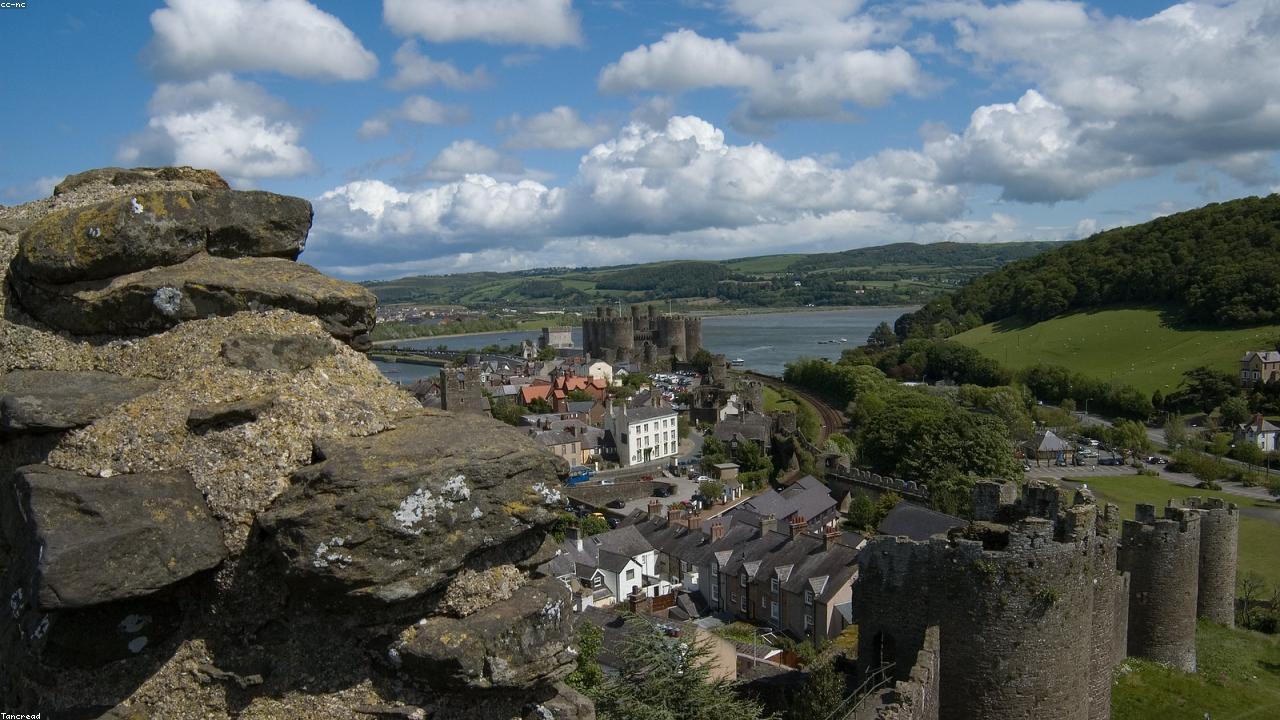
Telford's sensitivity to context at Conwy is remarkable for its era. Rather than designing the bridge towers in the industrial aesthetic then fashionable for civil engineering, he gave them a Gothic castellated appearance specifically calibrated to harmonise with the 13th-century towers of Conwy Castle immediately alongside. The result — the bridge's towers echoing the castle's drum towers, the suspension chains curving between them — is one of the most successful pieces of architectural integration in the history of British engineering.
The bridge was superseded for vehicles in 1958 by a new road bridge and later by the A55 expressway tunnel beneath the estuary. The National Trust, which manages the bridge, maintains it as a pedestrian crossing — keeping Telford's original structure in use, giving walkers the opportunity to cross the estuary on a bridge that was carrying the Dublin mail coach almost 200 years ago.
Visiting tips
Getting there
The bridge is at the north end of Conwy quayside (LL32 8LD). Walk from Conwy station (5 minutes) or from the castle (1 minute). The toll keeper's cottage is on the Conwy side of the bridge and can be visited independently of the castle.
Photography
The most famous viewpoint is from the quayside looking north-west — bridge in the foreground, castle behind. Evening light is especially good. The view from the bridge itself over the estuary gives a different and often overlooked perspective.
Find it on the map
Frequently asked questions
The bridge was designed by Thomas Telford (1757–1834) and opened in 1826. Telford was the foremost civil engineer of his era — responsible for the Pontcysyllte Aqueduct (1805, UNESCO World Heritage Site), the Menai Suspension Bridge (also 1826), the Holyhead Road (now the A5), and hundreds of miles of roads, bridges and canals. The Conwy bridge was built simultaneously with the Menai Suspension Bridge, 12 miles to the west.
Telford designed the bridge towers in a Gothic castellated style specifically to harmonise with the adjacent Conwy Castle — the chains of the suspension bridge connecting to towers that echo the medieval drum towers of Edward I's 1283 fortress. This was an early example of architectural sensitivity to historic setting, and the result — the bridge framing views of the castle, the castle providing the backdrop to the bridge — is one of the most photographed compositions in North Wales.
The bridge is open for pedestrian crossing — walkers can cross the Conwy Estuary on Telford's original structure. It is no longer used for vehicles (a modern road bridge and the A55 expressway tunnel now carry traffic). The National Trust, which manages the bridge, keeps it open as a heritage structure for pedestrians and cyclists.
The small toll keeper's cottage at the Conwy end of the bridge is managed by the National Trust and open seasonally. Inside, the cottage has been furnished to show how the toll keeper and family lived in the early Victorian period when the bridge was in use as a toll road. Admission is a small charge. The cottage is on the quayside and makes a pleasant short addition to any Conwy visit.
Both bridges were designed by Telford and opened in 1826. The Menai Suspension Bridge (12 miles west, crossing the Menai Strait to Anglesey) is larger and more famous, but the Conwy bridge is equally elegant and has the exceptional advantage of its proximity to Conwy Castle. The two bridges together represent Telford's solution to the problem of road connectivity in North Wales — both part of his improved Holyhead Road from London.