At a glance
Cistercian abbey founded 1198 at the Mawddach/Wnion confluence — standing lancet windows, meadow setting below Snowdonia's southern mountains, Cadw, free, open at all times. 1 mile from Dolgellau. Combine with the Mawddach Trail or Precipice Walk for a full southern Snowdonia day. LL40 2HE.
About Cymer Abbey
Cymer Abbey was founded in 1198 by the Cistercian order, in a flat river meadow at the confluence of the Afon Mawddach and Afon Wnion — approximately 1 mile north of Dolgellau. The site was chosen with the Cistercian eye for pastoral land and moving water: the meadows provided grazing, the rivers provided the mill power and fish that sustained a monastic community. Patronage came from the princes of Gwynedd, the ruling dynasty of north Wales, who used the abbey as a burial site and a centre of cultural life.
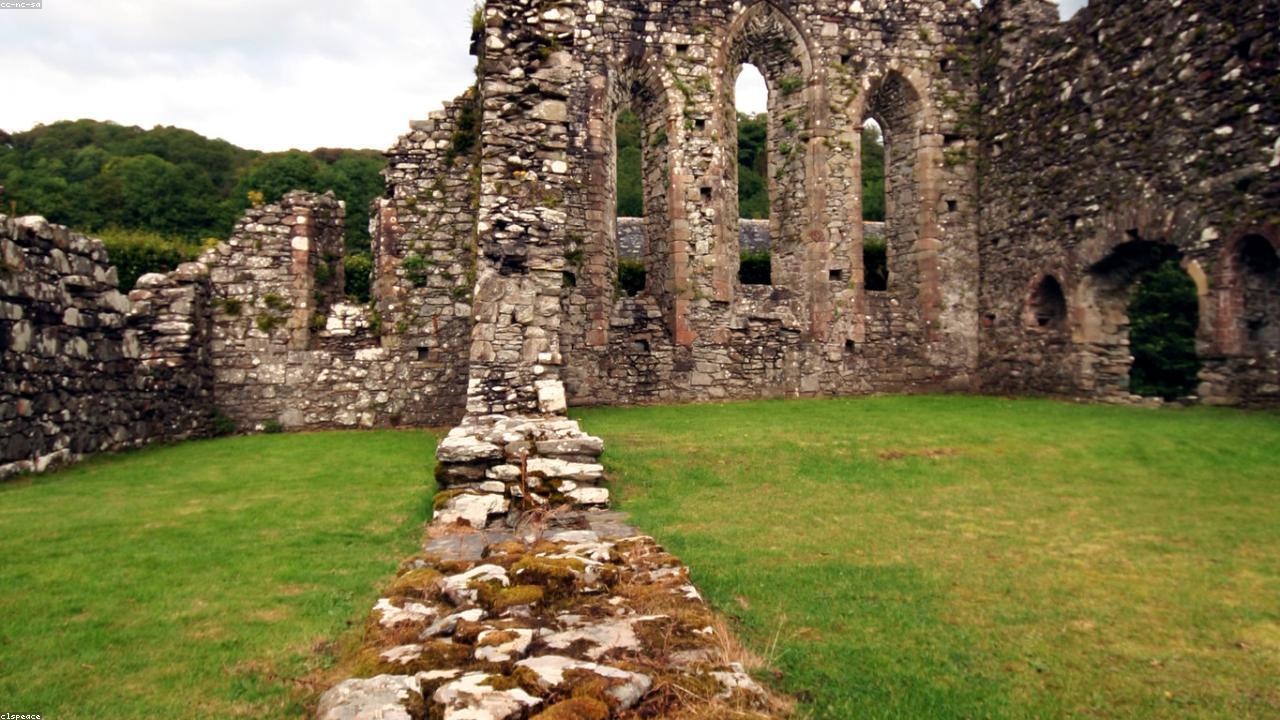
The abbey was never fully completed — it remained one of the smaller and simpler Cistercian houses in Wales — but what survives has considerable atmosphere. The north wall of the church, with three lancet windows standing to full height, gives a clear impression of the building's original character. The cloister and domestic buildings are reduced to earthwork humps in the grass, but the position — mountains on three sides, the Mawddach visible nearby — provides a setting that makes Cymer one of the most evocatively placed medieval ruins in north Wales. Cadw manages the site; entry is free and the site is open at all reasonable times.
The nearest facilities are in Dolgellau (1 mile south), which has cafés, a car park, and access to the Mawddach Trail cycling and walking route. The Precipice Walk (2 miles from Dolgellau, spectacular circular with Mawddach views) and Cadair Idris (5 miles, multiple ascent routes) make natural companions for a full day in southern Snowdonia.
Find it on the map
Frequently asked questions
Cymer Abbey (Abaty Cymer in Welsh) was founded in 1198 by the Cistercian order, with patronage from the princes of Gwynedd — the ruling dynasty of north Wales who used the monastery as a centre for religious life and burial. The Cistercians chose the site at the confluence of the Mawddach and Wnion rivers deliberately: the order typically established monasteries in remote valleys with access to good agricultural land and water, and the Mawddach meadows provided both. The abbey was never fully completed — it remained smaller and less elaborate than major Cistercian houses elsewhere in Wales (like Tintern or Valle Crucis) — and the dissolution of the monasteries under Henry VIII ended monastic life here in 1537. After dissolution, the abbey buildings were quarried for stone by local builders, but the church walls and some claustral structures survived.
The most complete surviving element is the north wall of the abbey church, with three lancet windows that still stand to full height — giving an impression of the building's original character even in its ruined state. The eastern end of the church also retains some structure. The cloister and domestic buildings are more fragmentary — earthwork bumps in the meadow indicate their positions, but the stonework has largely been removed. Despite the incompleteness of the remains, the setting is remarkable: the abbey ruins sit in a flat river meadow, with the Mawddach flowing close by and the hills of Snowdonia rising on three sides. The combination of medieval masonry, mountain backdrop, and riverside atmosphere makes Cymer one of the most evocative ruined abbeys in north Wales, despite being smaller than Valle Crucis or Strata Florida.
Cymer Abbey is managed by Cadw (Welsh Government) and is free to visit. A small car park is located off the A494 approximately 1 mile north of Dolgellau town centre — follow the brown heritage signs. The abbey is a short walk (a few hundred metres) across a meadow from the car park. There are no facilities on site — no café, shop, or toilets — so it is best visited as part of a trip that also takes in Dolgellau (1 mile), which has cafés and facilities. The site is accessible — the meadow approach is flat and the ground around the ruins is relatively even. The abbey is open at all reasonable times; no booking is required. It is a particularly good visit in early morning or late afternoon when the light on the stone is at its best and other visitors are few.
Cymer Abbey is worth a 30–60 minute visit, particularly if you are already in the Dolgellau area or travelling between Dolgellau and Barmouth. It is not a major spectacle in the way of Conwy or Caernarfon Castles, or even Valle Crucis Abbey (which is more complete and better presented), but it has qualities that those larger sites lack: genuine remoteness, a riverside setting that retains something of the Cistercian pastoral ideal, and the freedom to wander without barriers or admission charges. Combined with the Mawddach Trail (the walking/cycling route along the estuary, 9 miles from Dolgellau to Barmouth), the Precipice Walk (circular above Dolgellau, views over the Mawddach), or a Cadair Idris ascent, Cymer Abbey fits naturally into a full day in the southern Snowdonia area.
North Wales has several medieval monastic sites in various states of preservation. Valle Crucis Abbey (near Llangollen, Cadw, adult ~£5) is the best-preserved Cistercian abbey in north Wales — a roofless but largely complete building with excellent interpretive presentation. Basingwerk Abbey (Greenfield Valley, Cadw, free) near Holywell is a substantial Cistercian ruin in a wooded valley. Penmon Priory (Anglesey, Cadw, free) is an Augustinian priory with a still-functioning medieval church. Maenan Abbey (near Llanrwst) is very fragmentary — little survives above ground. Bardsey Island (Ynys Enlli) had an important Augustinian priory whose ruins are accessible only by boat. Of these, Valle Crucis is the most rewarding visit for those primarily interested in monastic architecture; Cymer is the most atmospherically sited.