At a glance
30-foot waterfall in a limestone gorge at Dyserth village — 10-minute woodland walk from the car park, ~£2 admission. 4 miles from Rhyl and Prestatyn. Easy family waterfall stop near the Denbighshire coast; best combined with Rhuddlan Castle (5 miles). Open Easter–October. LL18 6AE.
About Dyserth Waterfall
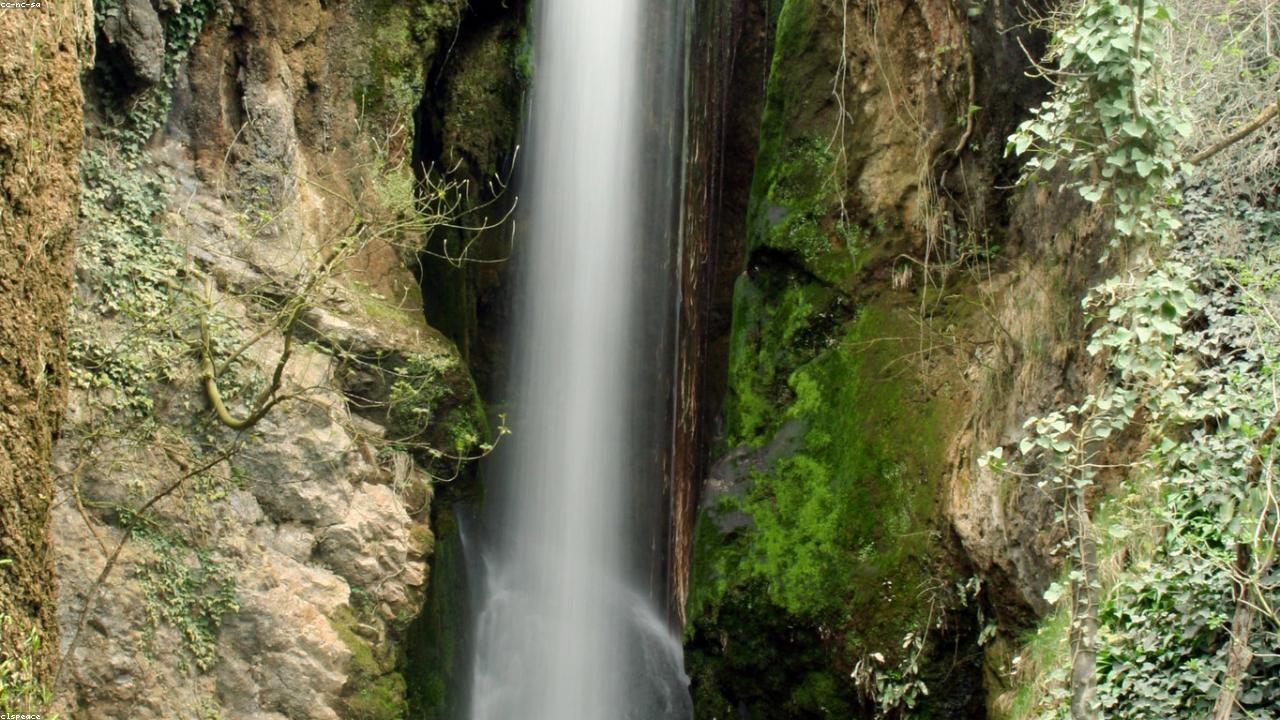
Dyserth Waterfall drops 30 feet through a narrow limestone gorge at the edge of Dyserth village — an accessible and genuinely pretty waterfall that most visitors to the Denbighshire coast entirely miss. The gorge is formed where the Afon Ffyddion, fed by springs from the limestone ridge above the village, cuts through a narrow rocky channel before plunging into a pool. The moss-covered limestone walls, overhanging vegetation, and the enclosed atmosphere of the gorge give the falls a sense of drama that belies their modest scale. After heavy rain the full width of the limestone lip is active and the sound fills the gorge.
The approach is simple: a gate off the main road in the village, a small admission charge at the turnstile, and a 5–10 minute walk through woodland on a path with steps. The falls are at the path's end. A visit takes 20–40 minutes. The combination of easy access, modest cost, and woodland waterfall setting makes Dyserth a particularly good stop with younger children who are spending the day at Rhyl (4 miles) or Prestatyn (4 miles).
Rhuddlan Castle (5 miles south-west, one of Edward I's concentric fortresses on the River Clwyd, free to visit) is the natural pairing for a half-day inland from the coast. Dyserth village has a pub and the medieval St Cwyfan's Church. The limestone hill above the village gives short walks with views over the Dee Estuary.
Find it on the map
Frequently asked questions
Dyserth Waterfall drops approximately 30 feet (9 metres) through a narrow limestone gorge into a pool below — a single plunge fall rather than a series of cascades. The height makes it a moderate-sized waterfall by Welsh standards (much smaller than Pistyll Rhaeadr at 240 feet, or Aber Falls at 120 feet, but comparable to smaller waterfalls in the Conwy Valley and Snowdonia). The gorge setting — moss-covered limestone walls, overhanging vegetation — gives the falls a sense of enclosure and drama disproportionate to their scale. The falls are at their most impressive after heavy rain, when the Afon Ffyddion is high and the full width of the limestone lip is active.
Dyserth Waterfall is accessed through a gate off the main road in Dyserth village (LL18 6AE) — a small admission charge (typically around £2 for adults) is collected at a turnstile or honesty box. A short woodland path of approximately 5–10 minutes leads to the falls. The path involves some steps and uneven ground but is manageable for most visitors in ordinary footwear. The falls are reached at the end of the path; a viewing area allows close inspection. The visit itself is brief — most people spend 20–40 minutes at the waterfall. There is a small car park; the village has additional on-street parking and a pub. Bus services from Rhyl pass through Dyserth, making it accessible without a car.
Dyserth Waterfall is a worthwhile short stop rather than a primary destination — it rewards the brief detour from the Rhyl or Prestatyn coast, particularly if travelling with children who enjoy waterfalls, but does not justify a long special journey for those primarily interested in major waterfalls (for which Pistyll Rhaeadr or Aber Falls are the obvious choices). Its value is as a hidden local feature that most visitors to the Denbighshire coast miss entirely: an easy woodland walk to a genuine waterfall within 15 minutes of the seafront. Combined with Rhuddlan Castle (5 miles, Edward I's concentric fortress, free), it makes a good inland half-day from a Rhyl or Prestatyn base.
Dyserth is a small hill village above the Clwyd Vale near Prestatyn — a working community that has remained relatively uncommercialized despite its proximity to the coast. The village sits below a limestone ridge, and the waterfall is fed by springs emerging from the limestone above. St Cwyfan's Church in the village has some interest as a medieval church with a partly 12th-century origin. The Dyserth hills above the village give short walks with good views over the Dee Estuary and the Clwydian Range. The village has a pub and limited facilities; it is best treated as a brief stop on a wider north-east Wales itinerary rather than a destination in itself.
Dyserth is the only readily accessible waterfall within easy reach of the Rhyl and Prestatyn coast. The Vale of Clwyd, opening southward from Rhyl, has no significant waterfalls in its lowland section. Moving further into the Clwydian Range and beyond to the Conwy Valley, waterfalls become more common — the Conwy Falls (near Betws-y-Coed, 25 miles), Swallow Falls (also near Betws-y-Coed), and the Rhaeadr Ddu (Black Waterfall, Ganllwyd, 40 miles south) are the nearest alternatives. Pistyll Rhaeadr (one of the Seven Wonders of Wales, 240 feet high) is 30 miles south-west near Llanrhaeadr ym Mochnant and is the most impressive waterfall in the general area.