At a glance
Conwy Valley market town — Tu Hwnt i'r Bont (15th-century National Trust tearoom, famous for autumn Virginia creeper), Gwydir Castle 1 mile, Gwydir Forest, and Conwy Valley Railway station. 8 miles north of Betws-y-Coed. LL26 0LD.
About Llanrwst
Llanrwst is a market town in the Conwy Valley, set where the river broadens in the flat valley floor between the upland forests of Gwydir on either bank. It is less visited than Betws-y-Coed to the south, but has claims that the more famous village cannot match: Tu Hwnt i'r Bont — the ivy-covered 15th-century building on the west bank of the Conwy, reached by the narrow 17th-century humpback bridge and run by the National Trust as a tearoom — is one of the most evocative small buildings in North Wales, and in autumn, when the Virginia creeper that covers it turns deep crimson, one of the most photographed.
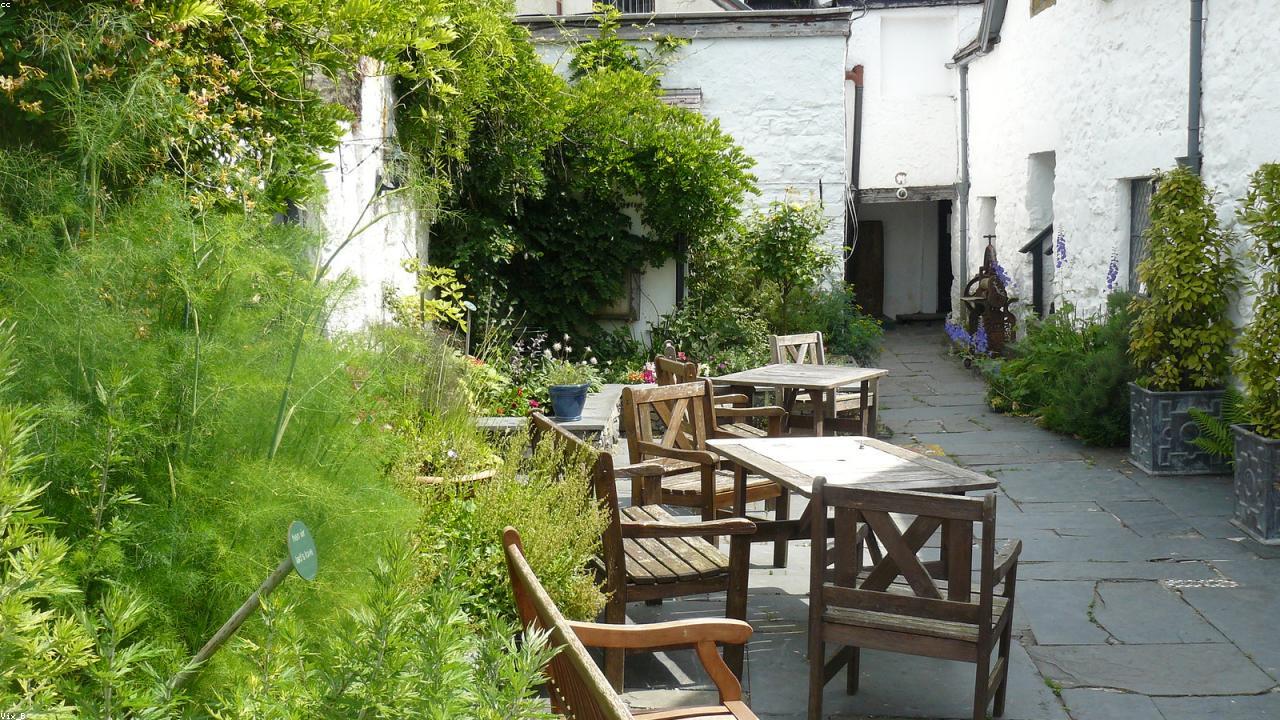
Gwydir Castle (1 mile south), a Tudor mansion built around an earlier hall house, is the region's most atmospheric house — its peacock-haunted courtyard, wisteria-draped walls, and story of the repatriated dining room (which spent 77 years in the Metropolitan Museum of Art in New York) give it a character unlike any National Trust property. Gwydir Uchaf Chapel in the forest above has a painted ceiling of unusual quality. The Gwydir Forest itself covers the steep slopes on both sides of the valley, with walking trails, mountain bike routes, and access to Llyn Geirionydd and the upper watershed.
Llanrwst has its own station on the Conwy Valley Railway, giving car-free access from Llandudno Junction (25 miles north) and onwards to Betws-y-Coed (8 miles) and Blaenau Ffestiniog. The town market and independent shops give it a working character that the more tourist-oriented valley villages lack. Trefriw Woollen Mill (3 miles north) is one of the last working mills in North Wales.
Find it on the map
Frequently asked questions
Tu Hwnt i'r Bont (Welsh for "beyond the bridge") is a 15th-century stone building on the west bank of the Conwy River at Llanrwst, reached via the narrow 17th-century bridge (Pont Fawr) that spans the river at this point. The building served as a courthouse in the 15th and 16th centuries and is now managed by the National Trust as a seasonal tearoom. It is one of the most photographed buildings in Wales — particularly in autumn when Virginia creeper turns the stone exterior a vivid crimson. The tearoom serves traditional Welsh cakes, teas, and light lunches; no entry charge is made beyond the cost of refreshments.
Gwydir Castle is a Tudor mansion 1 mile south of Llanrwst in the Conwy Valley, built primarily in the early 16th century around a medieval hall house. The castle is notable for its atmospheric interiors, peacocks in the grounds, and the remarkable story of its dining room — the Gwydir Dining Room, sold in 1921, ended up in the Metropolitan Museum of Art in New York, where it remained until being returned and reinstalled at the castle in 1998. The castle is privately owned and run as a small hotel and visitor attraction. The formal gardens and the wisteria-draped courtyard are among the finest in North Wales.
Llanrwst has a station on the Conwy Valley Railway — a branch line running 27 miles through the Conwy Valley from Llandudno Junction on the main North Wales Coast Line to Blaenau Ffestiniog in the mountains. The journey through the valley is one of the most scenic railway trips in North Wales, passing Betws-y-Coed, the Fairy Glen, and into the slate landscape of the upper valley. Services are infrequent (check timetables), but the railway gives a car-free option for reaching both Llanrwst and nearby Betws-y-Coed. There is a station north of the river (Llanrwst) and one south (North Llanrwst).
Gwydir Forest is a large Forestry Wales forest covering the slopes above the Conwy Valley on both sides of the river around Llanrwst and Betws-y-Coed. It offers a network of walking trails, mountain bike routes, and forest drives through a mixture of conifer plantation and older woodland. The forest is accessible from multiple points — the Llanrwst side gives access to walks towards Gwydir Uchaf Chapel and the upper forest; the Betws-y-Coed side connects to Llyn Geirionydd (a beautiful lake popular for wild swimming) and the mountain bike trails of Marin Trail. The forest is free to enter on foot.
Gwydir Uchaf Chapel (2 miles south-west in the forest) has a remarkable painted wooden ceiling installed by Sir Richard Wynn in 1673 — one of the finest examples of 17th-century painted decoration in Wales. The Conwy Falls (6 miles south on the A5) are among the most dramatic waterfalls on the Afon Conwy. Betws-y-Coed (8 miles south) is the main Snowdonia gateway village with the Swallow Falls and Conwy Valley Railway. Trefriw Woollen Mill (3 miles north) is one of the last working woollen mills in North Wales, open for tours and with a well-regarded shop.