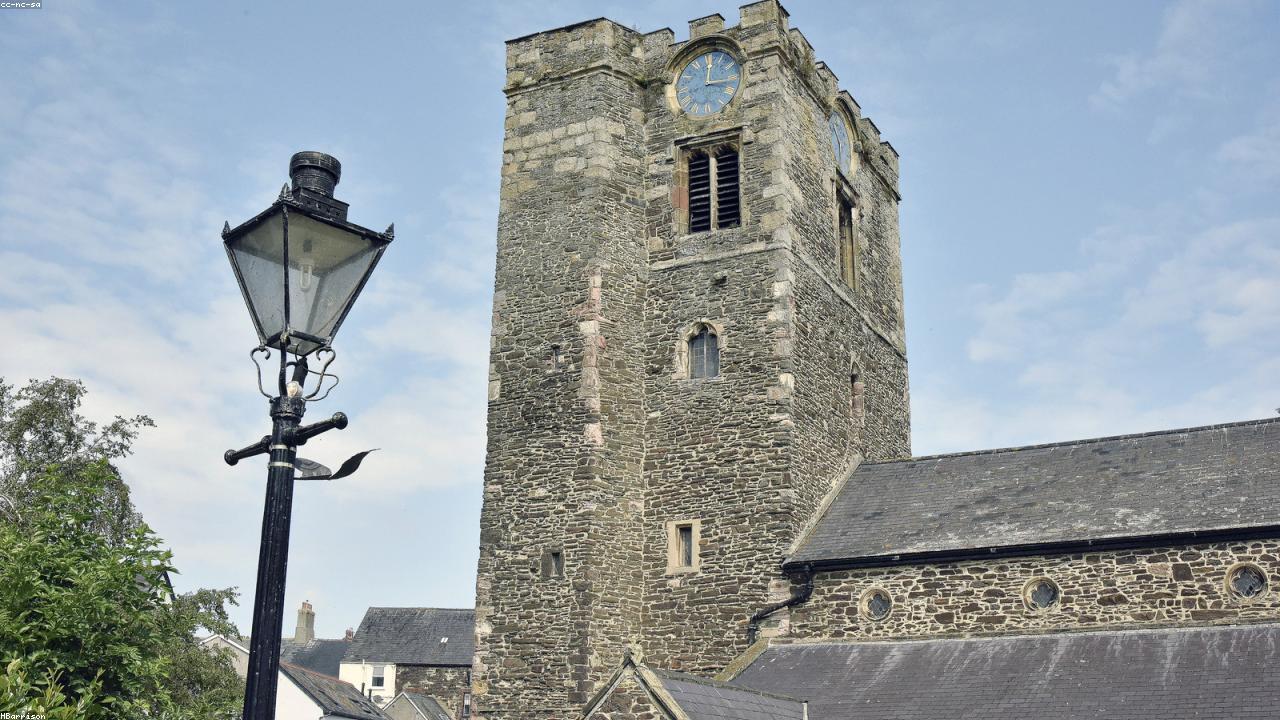
At a glance
Conwy is one of the finest medieval walled towns in Europe — a UNESCO World Heritage castle built 1283–1287, an intact 1.3km town walls circuit (free to walk), Plas Mawr Elizabethan townhouse, Aberconwy House (the oldest surviving medieval house in Wales), and Telford's suspension bridge. Compact enough to explore in a day; rich enough to reward two. Accessible by rail from Chester and Bangor.
About Conwy
Conwy was built as an English colonial settlement in 1283 alongside Edward I's castle, one of the most ambitious military construction projects in medieval Europe. The castle and the town walls were built simultaneously by the same workforce — the town was designed as an English borough, walled and defensible, a foothold for English settlement in the conquered Welsh heartland. Seven hundred years later, the colonial purpose has dissolved but the physical infrastructure remains with an integrity that is extraordinary even by European standards: the walls still circuit the medieval town on their original line, the castle retains its eight towers, and the street pattern within the walls reflects the 13th-century grid of the planted borough.
The Elizabethan period added a second layer of significance. Plas Mawr, built on the main street in the 1570s and 1580s by a merchant family that had prospered within the post-conquest settlement, is among the finest Elizabethan townhouses surviving in Britain — its plasterwork, painted chambers, and enclosed courtyard preserved with an unusually complete domestic character. Aberconwy House on Castle Street, substantially earlier and more modest, has been a merchant's house, a bakery, and a temperance hotel through its seven centuries — the National Trust has preserved it in a form that makes the accumulated changes visible rather than smoothing them away.
The quayside combines function and heritage without difficulty. Working boats still use the river; the fishing industry that sustained Conwy through the medieval period has a continuous, if diminished, presence. The restaurants on the quay serve the mussels and seafood for which the estuary has been known for centuries. The smallest house in Britain — a single room wide, barely two storeys high — occupies a gap in the quay wall that has somehow persisted through every period of redevelopment. It is a town that has kept its oddities as well as its monuments.
What to see and do
- Conwy Castle — UNESCO World Heritage fortress; eight towers, great hall, and spectacular views from the battlements (Cadw admission).
- Town walls circuit — 1.3km free walk on intact medieval walls with 22 towers; one of the best free heritage experiences in Wales.
- Plas Mawr — the finest Elizabethan townhouse in Wales; original plasterwork and painted chambers (Cadw admission).
- Aberconwy House — the oldest surviving medieval house in Wales (National Trust admission).
- Conwy suspension bridge — Telford's 1826 bridge beside the castle; tollhouse open seasonally (National Trust).
- Quayside — restaurants, the smallest house in Britain, fishing boats, and estuary views.
- Estuary boat trips — seasonal seal watching and castle-view cruises from the quay.
- RSPB Conwy — wetland nature reserve on the A55 approach, excellent for wading birds year-round.
Getting to Conwy
By rail: Conwy station is on the North Wales Coast Line — 5 minutes from Llandudno Junction, 15 minutes from Bangor, 1 hour from Chester. The station is a short walk from the castle and quayside.
By road: A55 to Junction 17 (signed Conwy), then into the town through the medieval walls. From Manchester: M56, A55, approximately 75 miles, 1 hour 20 minutes. Note: the tunnel under the estuary (A547) provides an alternative approach avoiding the town centre.
Parking: Llanrwst Road and Vicarage Gardens car parks; both pay-and-display, within 5 minutes' walk of the castle. The town walls limit road access — follow signs carefully and park outside the walls rather than attempting to drive through the gate.
Find it on the map
Frequently asked questions
Conwy is known principally for Conwy Castle — one of Edward I's Iron Ring fortresses built between 1283 and 1287, a UNESCO World Heritage Site and Cadw property. The castle is accompanied by an almost complete circuit of medieval town walls stretching 1.3 kilometres with 22 towers, encircling the medieval town. The walls circuit walk is free and one of the finest historical walks in Wales. Conwy also contains Plas Mawr (the best-preserved Elizabethan townhouse in Wales), Aberconwy House (the oldest medieval house in Wales), and Thomas Telford's suspension bridge of 1826.
Yes. The Conwy town walls circuit is free to walk and accessible from multiple entry points around the town perimeter. The walls stretch 1.3 kilometres and take approximately 45 minutes to circuit at a leisurely pace. Several towers allow access to elevated views over the town, the estuary, and the castle. The walls are maintained by Cadw and are open during daylight hours. This is one of the best free heritage experiences in North Wales.
Conwy has its own railway station (Conwy station) on the North Wales Coast Line with services to Llandudno Junction (5 minutes), Chester (1 hour), and Bangor (15 minutes). By road, take the A55 to Junction 17 (Conwy) — approximately 50 miles from Chester, 75 miles from Manchester via M56 and A55. Parking is available at Llanrwst Road car park and Vicarage Gardens, both a short walk from the castle and town walls.
Plas Mawr ("the great mansion") is an Elizabethan townhouse on High Street, Conwy, built between 1576 and 1585 for merchant Robert Wynn. It is the best-preserved Elizabethan townhouse in Wales and one of the finest in Britain, with original plasterwork, painted chambers, and a complete courtyard. Managed by Cadw, it gives an unusually detailed picture of prosperous Elizabethan domestic life. It requires separate admission from Conwy Castle and is worth allowing an additional 1–2 hours.
Yes. Seasonal boat trips from Conwy Quay operate on the Conwy estuary — seal watching cruises, estuary tours past the castle, and longer trips into Conwy Bay. The view of Conwy Castle from the water, with Telford's suspension bridge in the foreground and the Carneddau mountains behind, is one of the finest composed views in Wales. Trips typically run Easter to October and are tide-dependent; departures are from the quayside beside the castle.
A full Conwy day includes: the town walls circuit (free, 45 minutes), Plas Mawr (1–2 hours), Aberconwy House (National Trust, 1 hour), the quayside with its concentration of restaurants and the smallest house in Britain, Thomas Telford's suspension bridge, and an estuary boat trip. The RSPB Conwy nature reserve on the A55 approach to the town is an excellent addition for birdwatchers. Combined, these give a genuinely rich day in one of the most densely layered heritage towns in Wales.