At a glance
Denbigh Castle (begun 1282) crowns a dramatic hilltop in the Vale of Clwyd and contains Wales' largest medieval castle gatehouse. Built by Henry de Lacy at Edward I's instigation after the conquest of North Wales, it commands sweeping views across one of Wales's finest valleys. The medieval town walls below are free to explore at any time.
About Denbigh Castle
Work on Denbigh Castle began in 1282 following the death of Llywelyn ap Gruffudd, the last native Prince of Wales. Edward I granted the lordship of Denbigh to Henry de Lacy, Earl of Lincoln, one of his most powerful supporters, who invested heavily in what became one of the most architecturally ambitious castles in the region. The hilltop site had strategic significance going back to the early Middle Ages — its Welsh name, Dinbych (little fort), hints at an earlier fortification on the same ridge.
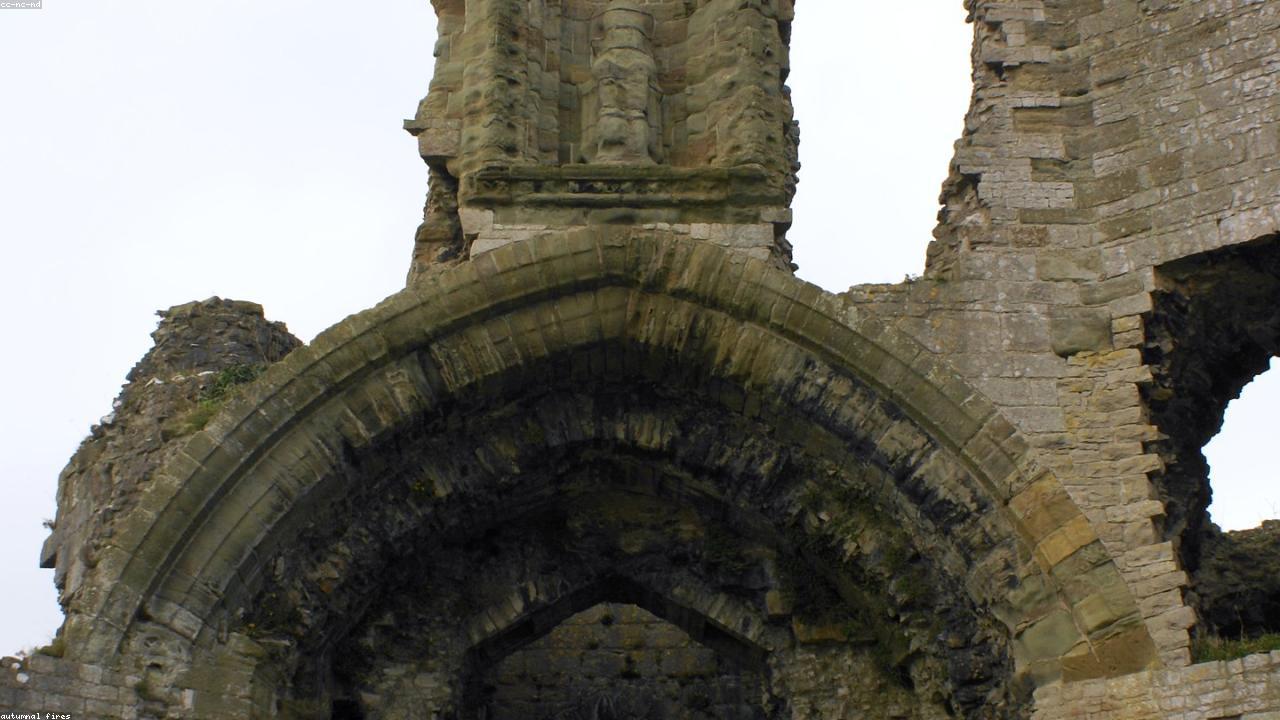
The castle's great gatehouse is its defining feature: three octagonal towers arranged around a vaulted entrance passage in a design unique in Wales and rare in Britain. The gate passage retains its ribbed vault and the portcullis grooves of the original drawbridge mechanism. Beyond the gatehouse, the castle develops into a large inner ward with curtain walls incorporating further towers, while below the castle the medieval borough walls — built simultaneously to enclose a planned English colonial town — stretch for 1.2 km across the hillside.
Denbigh's history is turbulent. It was captured by Madog ap Llywelyn during the Welsh revolt of 1294, besieged several times thereafter, and became a Royalist stronghold during the Civil War — one of the last in Wales to surrender, holding out until October 1646. The castle was slighted after its fall and fell into the picturesque ruin that stands today.
What to see at Denbigh Castle
- The great three-towered gatehouse — Wales' largest medieval castle gatehouse, with three octagonal towers and a vaulted passage. A Cadw interpretation board explains its unique design.
- The inner ward and towers — Walk the circuit of the inner ward walls and climb the surviving towers for increasingly wide views over the vale.
- The town walls — Freely accessible 1.2 km circuit below the castle, with the Burgess Gate, the town ditch and several wall towers still standing.
- Vale of Clwyd views — The hilltop commands one of the broadest valley panoramas in North Wales, with the Clwydian Hills AONB visible to the east.
- Leicester's Church — The roofless shell of an unfinished church begun by Robert Dudley, Earl of Leicester, in 1579 in the town below the castle — an atmospheric monument to Elizabethan ambition.
Visiting tips
Getting there
Denbigh is on the A525, 6 miles south of St Asaph and 10 miles west of Ruthin. From the A55, take Junction 27 (St Asaph) and follow the A525 south. The Castle Hill car park is signposted from the town square. Nearest railway station is Rhyl (10 miles north); bus services run from Rhyl town centre to Denbigh.
Town walls walk
The medieval town walls circuit can be walked independently without castle admission and takes around 45 minutes. Start from the Burgess Gate on the north side and follow the walls clockwise. This is particularly rewarding in the late afternoon when the valley light is at its best.
Find it on the map
Frequently asked questions
Denbigh's three-towered great gatehouse is the largest medieval castle gatehouse in Wales. Three octagonal towers flank the entrance passage in a design unique in Britain, and the gate passage itself retains much of its original vaulting. The sophistication of this gatehouse reflects the ambitions of its builder, Henry de Lacy, Earl of Lincoln, who was one of the most powerful barons of Edward I's court.
The medieval town walls that run below the castle are freely accessible at all times and do not require castle admission. The walls stretch for approximately 1.2 km around the old hilltop town and include several towers and the Burgess Gate. They are well worth exploring on foot even if you do not visit the castle itself.
Denbigh is on the A525 in the Vale of Clwyd. By road from the A55, take Junction 27 (St Asaph) and follow the A525 south for 6 miles. Rhyl railway station is the nearest rail connection, about 10 miles north, with bus links to Denbigh town centre. The castle is a 5-minute uphill walk from the town square.
Outstanding. The hilltop site commands panoramic views across the Vale of Clwyd — one of North Wales's most fertile and beautiful valleys — to the Clwydian Range to the east and the Snowdonian peaks to the west on clear days. The view from the great gatehouse towers is one of the finest of any Welsh castle.
Denbigh was besieged several times. In 1294 it was captured by Madog ap Llywelyn during the Welsh revolt. During the Civil War it was one of the last Royalist strongholds in Wales, holding out until October 1646 — making it one of the longest-held Royalist castles in Wales.