At a glance
Sir Clough Williams-Ellis's extraordinary Italianate fantasy village — 50 years in the making (1925–1975), set on a private wooded peninsula above the Dwyryd estuary, and filming location for the cult 1960s series The Prisoner. Adult £16.00 (April 2026).
About Portmeirion
Portmeirion is among the most extraordinary built environments in Britain — a fantasy Italianate village created entirely by one man over five decades. Welsh architect Sir Clough Williams-Ellis began acquiring the neglected estate in 1925 and spent the next 50 years constructing and embellishing his village with architectural salvage from demolished buildings across Britain and Italy. He died in 1978, three years after declaring the village finished at the age of 90.
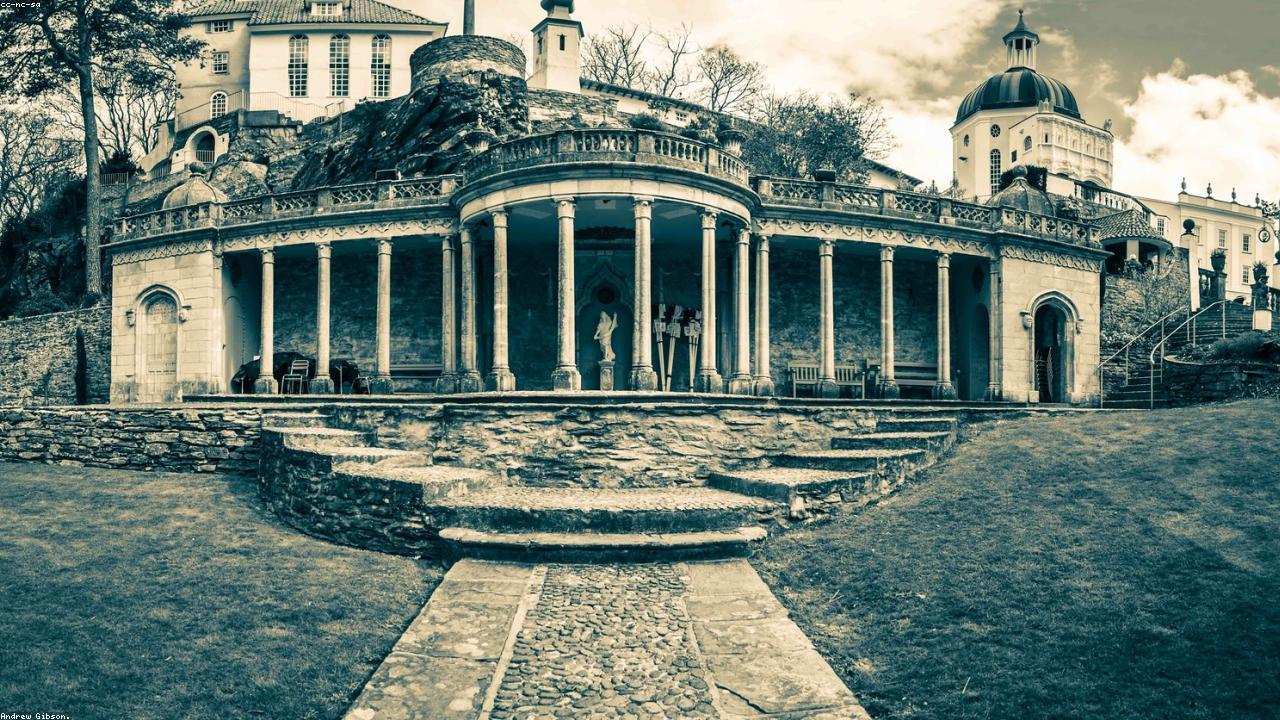
The result is a collection of some 50 buildings in a variety of Mediterranean, Baroque and Gothic styles arranged around a central piazza and hotel — all set on a wooded peninsula above the Dwyryd estuary with views across to the mountains of Snowdonia. The buildings include a campanile (bell tower), a triumphal arch, a baroque colonnade, a domed rotunda and numerous cottages, all painted in pastels of salmon, cream and terracotta. Many elements are conscious "follies" — facades with no rooms behind them.
Portmeirion became internationally famous as the location for the cult 1960s television series The Prisoner, starring and produced by Patrick McGoohan. The village's surreal atmosphere — dreamlike, beautiful and somehow unsettling — perfectly matched the series' themes of identity and imprisonment. The show has a devoted worldwide following and regular Prisoner conventions are held at Portmeirion.
What to see at Portmeirion
- The central piazza and hotel — The heart of the village — the baroque colonnade, the hotel façade and the campanile create the most photographed viewpoint.
- The Prisoner locations — A map available on site identifies all the key filming locations from the series — the Green Dome, the Stone Boat, the Square and more.
- The estuary beach — At low tide, a sand and mud estuary beach is accessible below the village — good for walking with views back up to the buildings.
- The sub-tropical woodland garden — 70 acres of mature woodland garden above the village — hydrangeas, rhododendrons and specimen trees in a sheltered microclimate.
- Portmeirion Pottery outlet — Buy direct from the most famous Welsh pottery brand — Botanic Garden and other iconic designs available at outlet prices.
Visiting tips
Getting there
From Porthmadog, take the A487 east and turn south at the Minffordd junction — the Portmeirion entrance is 1 mile further. Minffordd station (served by both the Cambrian Coast Line and the Ffestiniog Railway) is a 1-mile walk from the entrance — an excellent combination of train and village in one day. Parking is on site (charged).
Best time to visit
The village faces west across the estuary — late afternoon light in spring and summer is stunning for photography. Weekday mornings in spring (April–June) are quietest. Summer evenings when day visitors have left but hotel guests are dining is perhaps the most atmospheric time — access for non-guests ends at the last entry (17:00 usually).
Find it on the map
Frequently asked questions
Portmeirion was designed and built by Welsh architect Sir Clough Williams-Ellis between 1925 and 1975. His stated aim was to demonstrate that a naturally beautiful site could be developed without being spoiled. He chose a near-derelict mansion on a wooded peninsula above the Dwyryd estuary and spent 50 years collecting architectural salvage from demolished buildings across Britain and Italy to create his unique village.
The 1960s cult series The Prisoner — starring Patrick McGoohan — was filmed almost entirely at Portmeirion. The village's surreal, dreamlike quality made it the perfect setting for the series's themes of identity and control. The Prisoner has a devoted worldwide following and Portmeirion hosts regular Prisoner fan conventions.
Day visitor admission at April 2026 rates: Adult £16.00, Child £8.00. Under-4s are free. Annual passes are available. Guests staying at the hotel or self-catering cottages within the village pay no day visitor admission. Booking in advance at portmeirion.wales is recommended for busy summer weekends.
Yes. The Portmeirion Hotel occupies the original Victorian mansion at the heart of the village. Self-catering cottages and the Castle (a private rental within the village) are also available. Hotel and cottage guests have free access to the village, the estuary beach and the 70-acre sub-tropical woodland garden.
Portmeirion Pottery is a UK ceramics brand established in 1960 by Susan Williams-Ellis, daughter of Sir Clough. Its best-known designs include Botanic Garden — one of the best-selling tableware patterns in British history. The village has a Portmeirion Pottery outlet store where visitors can buy pottery direct.
Allow 2–4 hours for a typical visit — 1.5–2 hours to explore the village and piazza, plus time for the beach at low tide and the sub-tropical woodland garden above the village. The restaurant and cafés make Portmeirion a good full lunch stop. The light is particularly beautiful in the late afternoon when the village faces west across the estuary.