At a glance
Remote limestone gorge and seasonal waterfall at the northern tip of the Eglwyseg escarpment near Llangollen — the place where limestone plateau meets moorland in a dramatic, narrow valley. Free; open at all times. Very narrow access road (single-track, 4 miles from Llangollen, unsuitable for caravans/coaches); very limited roadside parking. Peregrine falcons on escarpment cliffs; moorland walking above. LL20 7BP.
About World's End
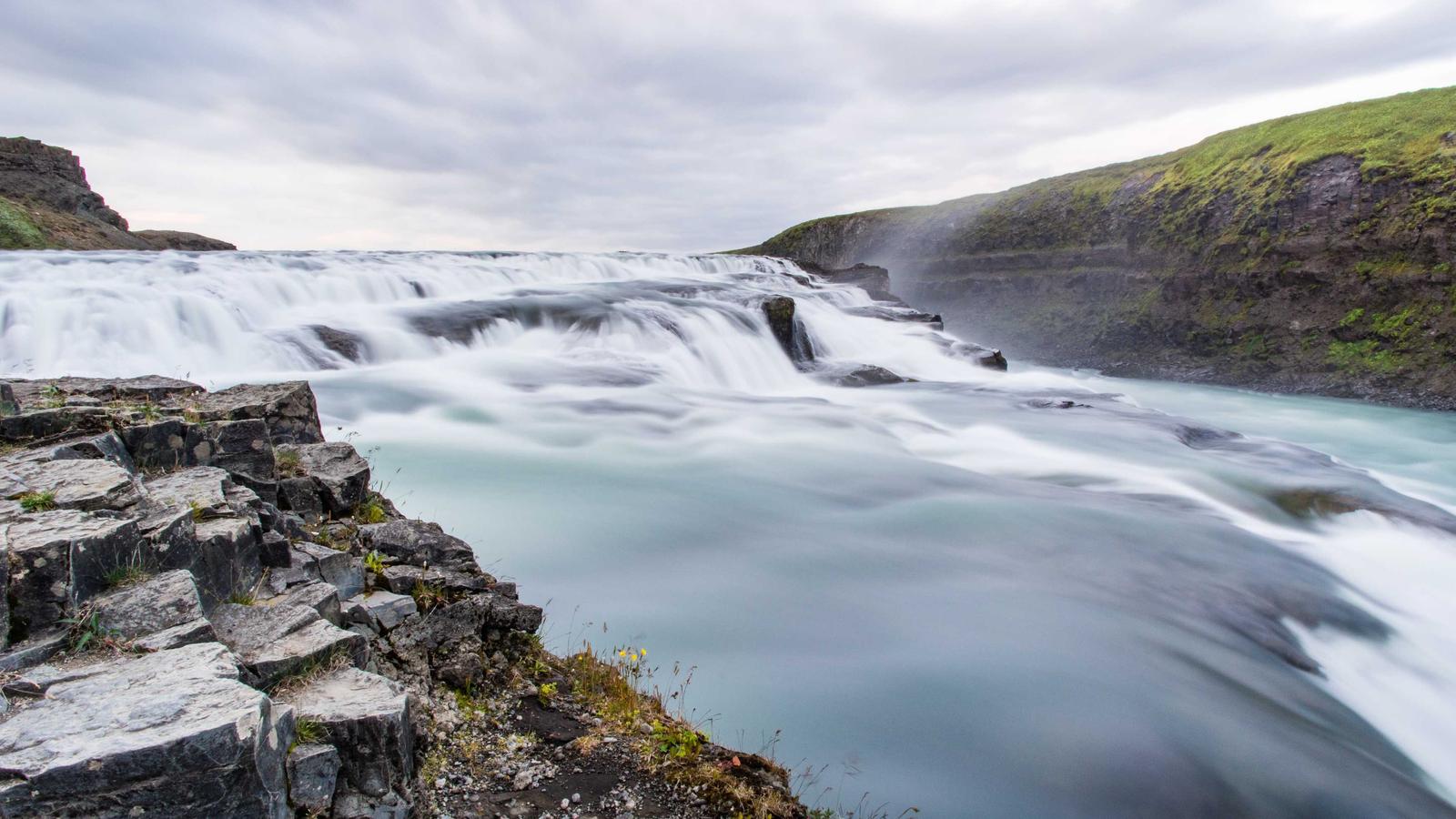
World's End earns its atmospheric name: a remote limestone gorge at the northern end of the Eglwyseg escarpment where the limestone plateau abruptly meets the moorland edge above Llangollen, creating a narrow valley with pale cliff faces, a seasonal waterfall (best in wet conditions), and the genuine feeling of arriving at the edge of something. Even by north Wales standards, it feels far away.
Reached by 4 miles of single-track road along the foot of the Eglwyseg escarpment from Llangollen (the same dramatic limestone cliffs visible from the town), World's End gives access to the moorland plateau above via footpaths and connects to the wider Clwydian Range walking network. Peregrine falcons nest on the escarpment cliffs. The waterfall through the limestone gorge is seasonal — strongest in autumn and winter, sometimes a trickle in dry summer — but the valley's visual drama and sense of remote atmosphere persist in all conditions.
No facilities, no car park (very limited roadside parking only). Car essential; carriage unsuitable for large vehicles. Combine with Horseshoe Pass (2 miles south-west) and Llangollen (4 miles east) for a full day on the limestone plateau edge.
Find it on the map
Frequently asked questions
World's End is reached by a narrow road from Llangollen that follows the northern base of the Eglwyseg escarpment — the dramatic limestone cliff face visible from the town. From Llangollen, follow signs for Eglwyseg/Trevor and take the single-track road along the foot of the escarpment (past the ruins of Dinas Brân above to the left). The road climbs gradually, passes through increasingly dramatic limestone scenery, and eventually reaches the World's End valley — approximately 4 miles from Llangollen town centre. The road is single-track with passing places throughout; it is unsuitable for coaches or large vehicles, and caravans should not attempt it. Parking at World's End itself is very limited (roadside only) and can be frustrating in busy periods. The early morning or weekday visits are strongly recommended. The journey along the Eglwyseg road is itself part of the experience — the limestone crags, the medieval castle above, and the progressive narrowing of the road create a sense of increasing remoteness.
The Eglwyseg escarpment is a prominent limestone cliff face that runs for several miles north-west of Llangollen — a pale, vertically bedded wall of Carboniferous limestone that forms the most dramatic geological feature in the Llangollen area. The escarpment rises steeply from the Dee Valley and represents the eastern edge of a limestone plateau that extends to the north-west. The limestone was laid down approximately 350 million years ago as sediment in a warm, shallow tropical sea when Wales was positioned near the equator. Subsequent earth movements folded and tilted the rock, and glaciers carved the present valley while leaving the limestone crags exposed. The Eglwyseg escarpment is a Site of Special Scientific Interest for its limestone grassland flora (on the plateau above the cliffs) and its geological interest. Peregrine falcons nest on the cliff faces. World's End is at the northern end of the escarpment, where the plateau begins to break up into moorland.
Yes — a waterfall cascades through the limestone gorge at World's End in wet conditions, though the flow is highly variable and the falls may be little more than a trickle in dry summer weather. The stream descends through the rocky gorge from the moorland above, and in winter or after heavy rain the falls can be dramatic. The combination of pale limestone cliffs, dark moorland above, and falling water gives World's End a distinctly atmospheric character in suitable conditions. The best time to visit for the waterfall is autumn and winter (when the stream is fed by rainfall and the moorland is saturated) or after sustained wet weather in any season. In dry summer conditions, the gorge retains its visual drama but the water may be minimal. Even without flowing water, the limestone geology and the sense of being at the absolute edge of the plateau — where the landscape changes suddenly from limestone to moorland — justify the visit.
World's End and the Eglwyseg escarpment support interesting wildlife in a compact area. Peregrine falcons nest on the limestone cliffs of the escarpment — they can often be seen from the World's End approach road, either perching on cliff ledges or in high-speed stoops after prey. Choughs (the scarlet-billed member of the crow family, symbol of Wales) are occasionally seen, though they are more common further west in Wales. The limestone grassland on the plateau above World's End has blue butterflies (common blue, small blue) in summer, and the calcareous flora includes several orchid species (common spotted, bee orchid) in favourable years. Red kites hunt over the whole area — the Clwydian Range has an established red kite population. The moorland above the gorge, accessed by footpaths from World's End, is good for skylarks, meadow pipits, and in summer, occasional merlin.
Yes — footpaths and tracks from World's End give access to the open moorland plateau above the gorge. The plateau is a broad expanse of heather and grass moorland — quiet, relatively featureless, and giving views north along the Clwydian Range and west across the Vale of Clwyd to Snowdonia on clear days. Paths are less clearly marked than in the more popular walking areas of the Clwydian Range, and navigation skills (map and compass) are useful. The moorland connects to the Horseshoe Pass (2 miles south-west) and the wider Clwydian Range walking network, allowing World's End to be incorporated into longer circular walks from Llangollen. The terrain is typically wet and boggy in the moorland hollows; waterproof footwear is recommended even in summer. The combination of the limestone gorge at World's End and the moorland plateau above gives a compressed but genuine sense of the geological and ecological diversity of this corner of north-east Wales.