At a glance
Dee Valley market town with punching-above-its-weight heritage — Pontcysyllte Aqueduct (UNESCO, 4 miles by towpath), Dinas Brân hilltop castle, Valle Crucis Abbey, Llangollen Steam Railway, canal boat trips, and International Musical Eisteddfod each July. 8 miles from Wrexham. LL20 8PD.
About Llangollen
Llangollen sits in the Dee Valley in north-east Wales — a market town in a dramatic natural setting, with the River Dee rushing through the centre under the medieval bridge and Dinas Brân castle silhouetted on the hill above. It punches well above its size. The International Musical Eisteddfod — a global folk music and dance festival held every July since 1947 — has made Llangollen internationally known. Pontcysyllte Aqueduct, 4 miles east along the canal towpath, is a UNESCO World Heritage Site. Valle Crucis Abbey, 2 miles north-west, is one of the finest ruined monasteries in Wales. And the Llangollen Steam Railway runs east along the valley floor toward Corwen.
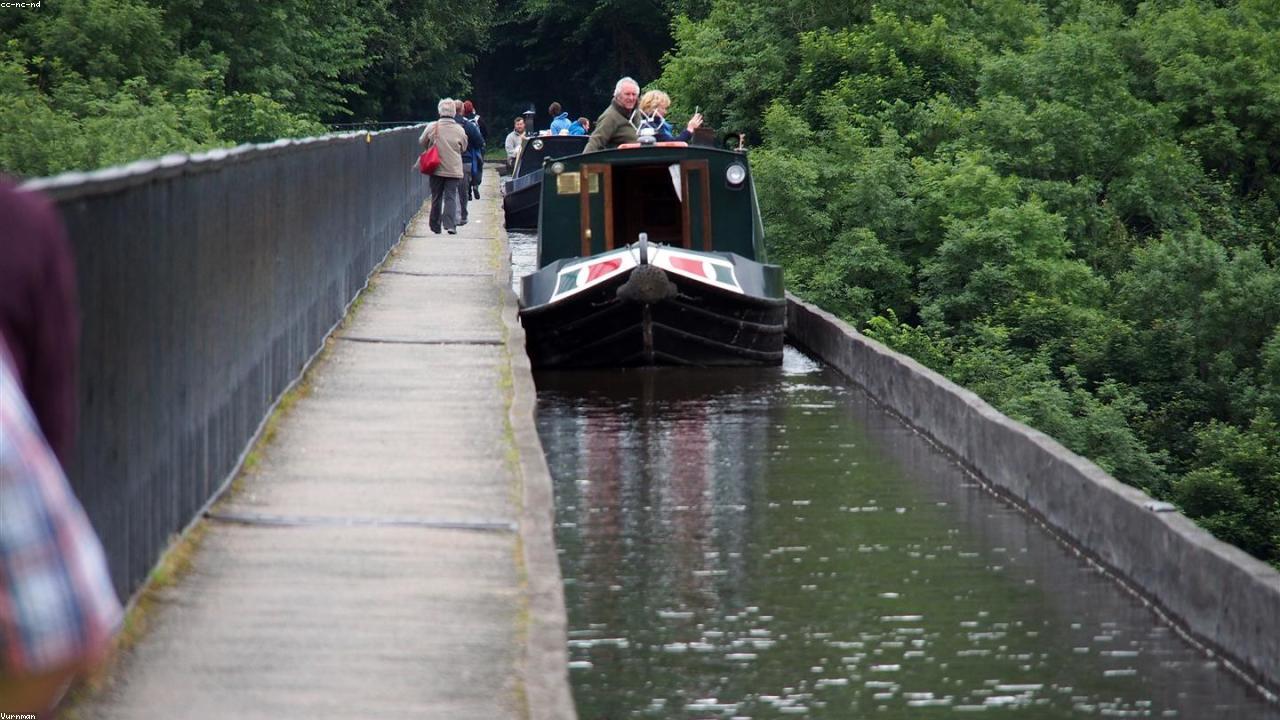
The canal that passes through the town — the Llangollen Canal, fed by the River Dee at Horseshoe Falls — was built in the early 19th century and carries the great engineering legacy of the region: Pontcysyllte Aqueduct, designed by Thomas Telford and completed in 1805, carries the canal in a cast-iron trough 126 feet above the River Dee on 18 masonry pillars. The free towpath walk from Llangollen Wharf to the aqueduct (4 miles each way) is one of the finest easy walks in north-east Wales. Canal boat trips from the wharf include an aqueduct crossing.
The Ladies of Llangollen — Lady Eleanor Butler and Sarah Ponsonby, who caused a scandal by eloping to live together at Plas Newydd in the town from 1780 — drew a stream of literary visitors including Wordsworth, Scott, and Shelley, and gave Llangollen an early reputation as a destination for the romantically minded. Their house, Plas Newydd, is now a small museum. Llangollen is 8 miles from Wrexham and 19 miles from Ruthin.
Find it on the map
Frequently asked questions
The Llangollen International Musical Eisteddfod is one of the world's great folk music and dance festivals, held every July in Llangollen since 1947. The Eisteddfod was founded in the aftermath of World War II as a gesture of international reconciliation — inviting folk performers from across the world to compete and perform in a small Welsh town on the River Dee. Today it attracts thousands of performers from over 50 countries, competing in choral, dance, and instrumental categories, with evening concerts featuring internationally known artists. The Royal International Pavilion, built to host the event, dominates the town.
Dinas Brân — "Crow Fortress" or "Fortress of Brân" — is a ruined medieval castle on a prominent hilltop 1 mile north of Llangollen, rising 400 metres above the town. The ruins are of a 13th-century Welsh castle (built by Madog ap Gruffudd Maelor, the lord of Powys Fadog), though the site has pre-Roman earthwork origins. The climb takes 30–40 minutes from the town on steep paths but rewards with panoramic views of the Dee Valley, the Pontcysyllte Aqueduct, and the Vale of Llangollen. The ruins are dramatically silhouetted against the sky and are one of the most evocative hilltop fortresses in Wales.
Yes — the Pontcysyllte Aqueduct is 4 miles east of Llangollen along the Llangollen Canal towpath. The towpath walk takes approximately 1.5–2 hours each way and passes through pleasant countryside. The aqueduct itself — Thomas Telford's masterpiece of 1805, carrying the canal 126 feet above the River Dee on 18 stone pillars — can be walked freely across its full 307-metre length on a narrow towpath with a low iron railing and an open drop on one side. The experience of walking across while looking down to the Dee far below is memorable. Alternatively, canal boat trips from Llangollen Wharf include an aqueduct crossing.
Valle Crucis Abbey is a ruined Cistercian abbey 2 miles north-west of Llangollen in the Eglwyseg Valley, founded in 1201 by Madog ap Gruffudd Maelor — the same Welsh lord who built Dinas Brân. It was one of the principal Cistercian monasteries in Wales until the Dissolution in 1537. The ruins include the west facade (largely intact to first-floor level), the chapter house, and the fishpond. Cadw manages the site (admission charged). The abbey is a quiet and genuinely atmospheric ruin, considerably less visited than its quality warrants.
Llangollen is 8 miles south-west of Wrexham on the A539, and 19 miles south of Ruthin. There is no mainline railway to Llangollen — the nearest stations are Ruabon (5 miles, on the Wrexham–Shrewsbury line) and Chirk (4 miles). Buses run from Wrexham several times daily. The Llangollen Steam Railway operates from Llangollen station (heritage railway, not a mainline connection) eastward to Corwen. By car, Llangollen is accessible from the A5 (which passes through the town) and the A483 from Wrexham.