Safety information
Welsh mountains demand respect. Conditions can change in minutes — even Snowdon in July sees casualties from inadequate kit and unexpected weather.
Carry: waterproofs, walking boots, warm layer, hat & gloves, OS Explorer OL17 (Snowdonia) or OL18 (Harlech & Bala), 1.5 L water, charged phone, head torch. Check the weather at mwis.org.uk on the morning. In an emergency call 999, ask for Police / Mountain Rescue, give your what3words location. Local team: the relevant Mountain Rescue Team.
At a glance
Northern summit of the Aran ridge (885 m / 2,904 ft) above Bala Lake — typically combined with Aran Fawddwy (905 m, 2 miles south) on a serious ridge traverse from Llanuwchllyn. Long views east across Llyn Tegid, north to Snowdonia, south across mid-Wales. Navigation skills essential; exposed ridge with cliff sections. Bala Lake Railway at Llanuwchllyn (steam trains to Bala). LL23 7DP.
About Aran Benllyn
Aran Benllyn (885 m / 2,904 ft) is the northern summit of the Aran ridge — the long, high spine of southern Snowdonia above the Bala Depression. Together with Aran Fawddwy (905 m, 2 miles south on the same ridge), it forms the most significant mountain group between the Snowdon/Glyderau massif to the north and Cadair Idris to the west. The Aran ridge is remote, serious, and infrequently visited compared to central Snowdonia — qualities that make it particularly rewarding for experienced mountain walkers seeking a less crowded day.
The classic approach from Llanuwchllyn at the southern end of Bala Lake follows a bridleway and ridge path to Aran Benllyn, then continues south to Aran Fawddwy for a full traverse — approximately 6–8 hours. The ridge is high, exposed, and requires navigation in poor visibility; the section at Erw y Ddafad Ddu has a cliff edge on the eastern side requiring care. Views are outstanding: Llyn Tegid (largest natural lake in Wales) to the east, the entire Snowdonia massif to the north-west, and on clear days the Brecon Beacons to the south.
The Bala Lake Railway (narrow-gauge, steam-hauled) operates from Llanuwchllyn to Bala — adding a classic Welsh mountain and railway combination to a single day in southern Snowdonia.
Find it on the map
Frequently asked questions
Aran Benllyn (885 m) and Aran Fawddwy (905 m) are the two main summits of the Aran ridge — a long, high backbone in southern Snowdonia running roughly north-south for approximately 8 miles above the Bala Depression. Aran Fawddwy is the higher summit (the highest mountain in the Meirionnydd historic county and south of the main Snowdon/Glyderau massif) and Aran Benllyn is approximately 2 miles to the north, on the same ridge. The two are typically climbed together in a single day — the classic Aran traverse starts at Llanuwchllyn (at the southern end of Bala Lake), climbs to Aran Benllyn, follows the ridge south to Aran Fawddwy, and returns via the same ridge or a longer horseshoe. The ridge between the two summits is high, exposed, and genuinely wild — there is a section of serious cliff edge (Erw y Ddafad Ddu, site of a 1960 air crash) that requires care in poor visibility.
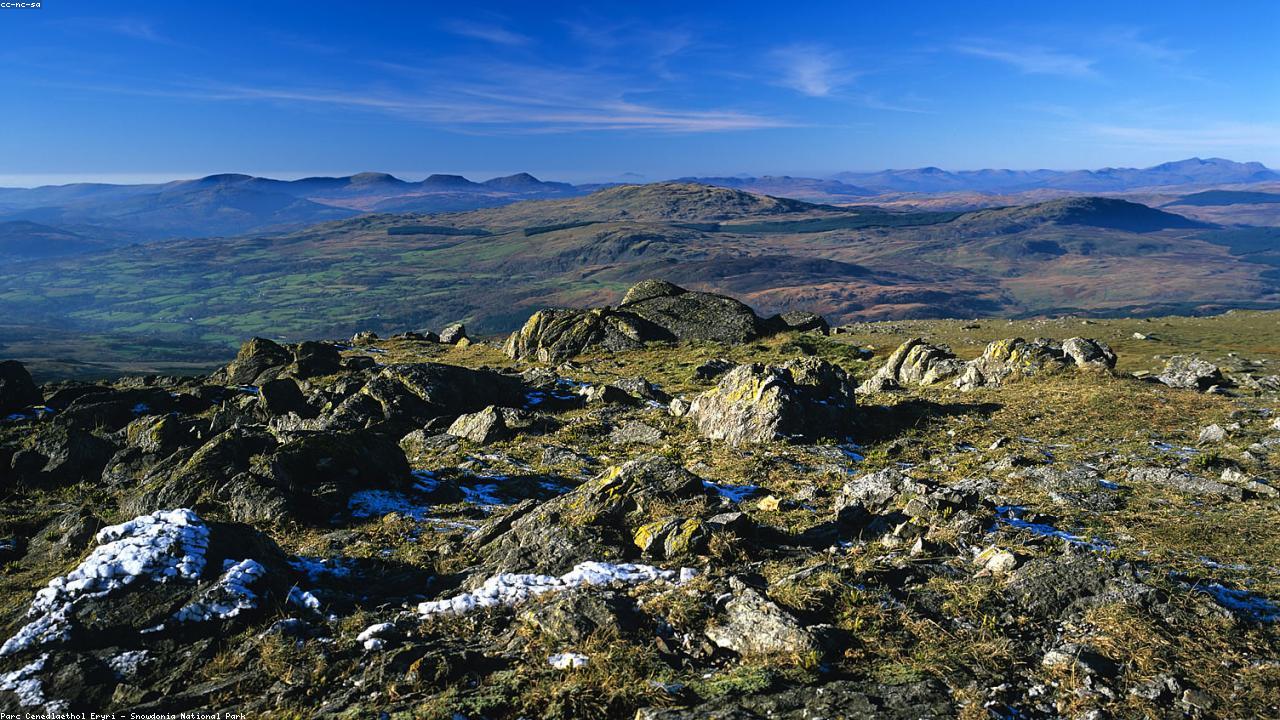
Aran Benllyn's position on the eastern edge of Snowdonia, above the great depression occupied by Bala Lake, gives distinctive views that differ from most Snowdonia summits. To the east, Llyn Tegid (Bala Lake — the largest natural lake in Wales) is directly below, with the Dee Valley and the Berwyn Mountains beyond — a panorama that extends into Shropshire on clear days. To the north, the Arenig mountains and Rhobell Fawr are prominent. To the west, the deep cwms of the upper Dyfi are entirely uninhabited upland. Snowdon and the main Snowdonia massif are visible to the north-west. Aran Fawddwy (slightly higher, 2 miles south) rises ahead along the ridge. On clear days, the Brecon Beacons and the Black Mountains of south Wales are visible to the south — a remarkably long view across the entire width of Wales.
The most popular approach to Aran Benllyn is from Llanuwchllyn at the southern end of Bala Lake (LL23 7DP). From the village, a bridleway and footpath climb steeply south-west through farmland and onto the open ridge, gaining the main Aran ridge at Erw y Ddafad Ddu and then continuing north-west to Aran Benllyn's summit — approximately 5 miles and 700 metres of ascent. Most walkers then continue south along the ridge to Aran Fawddwy (a further 2 miles) before returning by the same route. An alternative approach from the south begins at Cwm Cywarch (a glacial valley west of Dinas Mawddwy), climbing steeply to Aran Fawddwy and then north along the ridge to Aran Benllyn — more scenic but more demanding. Both routes require good navigation in poor visibility, as the upper ridge has few landmarks and the terrain is featureless in cloud.
Erw y Ddafad Ddu ("The Acre of the Black Sheep") is a section of the Aran ridge east of Aran Benllyn, notable for a serious cliff edge on the eastern side of the ridge — a place where walkers must exercise care, particularly in mist. The area is known as the site of a 1960 mountain rescue incident that became significant in the development of organised mountain rescue in Wales: on 5 June 1960, a de Havilland Vampire jet aircraft crashed into the hillside at Erw y Ddafad Ddu, killing the crew, and the response to the crash (involving a large-scale rescue operation in difficult terrain) contributed to the formation of the Aberdyfi Mountain Rescue Team. A memorial cairn marks the crash site on the ridge. The incident is a reminder of the genuinely serious nature of the Aran ridge as a mountain environment.
Yes — Llanuwchllyn (the starting point for the most popular Aran ridge approach) is the southern terminus of the Bala Lake Railway (Rheilffordd Llyn Tegid), a narrow-gauge steam railway that runs along the south-eastern shore of Bala Lake for 4.5 miles to Bala town. The railway was built on the trackbed of the former Great Western Railway branch from Ruabon to Barmouth and is now operated as a heritage railway with steam and diesel locomotives. Trains run from Easter to October on most days, with a journey time of approximately 25 minutes each way. For walkers on the Aran ridge, the railway adds an attractive option: walk up to Aran Benllyn (or the full traverse to Aran Fawddwy) and return to Llanuwchllyn, then take the train to Bala for a meal before returning to Llanuwchllyn by road. The combination of mountain walk and narrow-gauge railway in the same day is a classic southern Snowdonia itinerary.