At a glance
UNESCO World Heritage walled town in Gwynedd dominated by Caernarfon Castle (begun 1283, Edward I's most powerful Iron Ring fortress). Victoria Dock harbour, Segontium Roman fort, Welsh Highland Railway terminus, and one of the most Welsh-speaking towns in Wales. LL55 2PB.
About Caernarfon
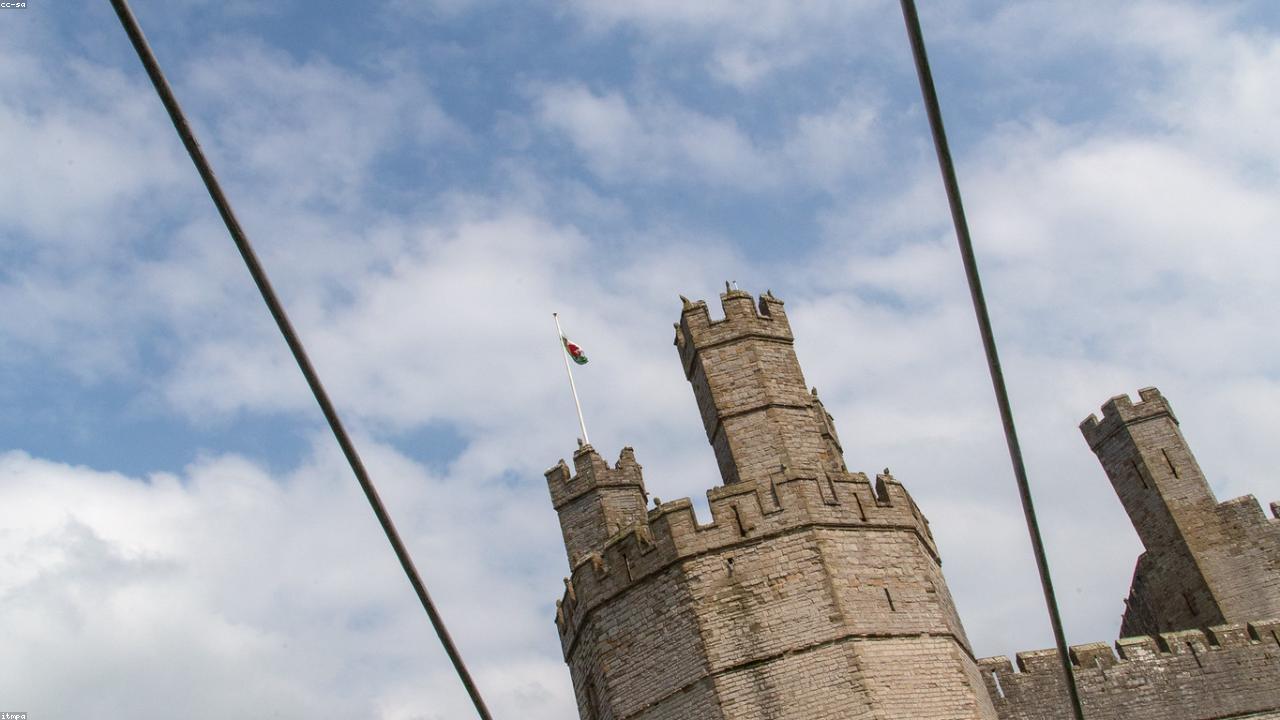
Caernarfon is a walled town at the south-western end of the Menai Strait — one of the most dramatically positioned towns in Wales, its castle's polygonal towers rising directly from the water where the River Seiont meets the strait. Caernarfon Castle, begun by Edward I in 1283, is the most powerful and symbolically charged of the Iron Ring castles: not simply a military fortification but a deliberate statement of English royal power, modelled partly on the walls of Constantinople and designed to serve as the administrative capital of north-west Wales. UNESCO recognises it, along with Harlech, Conwy, and Beaumaris castles, as a World Heritage Site.
The town enclosed by the medieval walls retains the grid plan of Edward I's planted borough of 1283. Narrow streets lead from the castle to the market square and the Church of St Mary — built into the town walls — and down to Victoria Dock on the Menai waterfront. The dock, once the commercial harbour for the slates of Snowdonia and the agricultural produce of the Llŷn Peninsula, now serves pleasure craft and provides the most photogenic views of the castle from across the water. The Segontium Roman fort — a Cadw museum on the eastern edge of the town — tells the story of the earlier Roman occupation of the same strategic site from the 1st to 4th centuries.
Caernarfon is one of the most strongly Welsh-speaking towns in Wales, with Welsh the everyday language of the community. The Welsh Highland Railway starts from the station adjacent to the castle walls and runs 25 miles south through Snowdonia to Porthmadog. The Lôn Eifion cycle path begins here and runs 12 miles south to Bryncir. Snowdon's trailheads are 10 miles east via Llanberis. The Llŷn Peninsula begins 5 miles south-west at Pontllyfni.
Find it on the map
Frequently asked questions
Caernarfon Castle is the most powerful fortress in Edward I's Iron Ring of conquest — a UNESCO World Heritage Site begun in 1283 and built with a deliberate symbolism that set it apart from the other Ring castles. Where Conwy, Harlech, and Beaumaris were primarily military structures, Caernarfon was designed as a seat of royal power: polygonal towers (not round), bands of differently coloured stone, and an Eagle Tower modelled on the walls of Constantinople. Edward I's son — the future Edward II — was born in the castle in 1284 and presented to the Welsh as their Prince, a tradition continued when the investiture of the Prince of Wales was held here in 1969.
Yes — Caernarfon has medieval town walls that are substantially intact and can be walked in part, though the circuit is not as complete as Conwy's. The walls connect directly with the castle on the waterfront and enclose the old town on three sides. Sections can be walked, giving views over the town rooftops and across to the Menai Strait and <span lang="cy">Anglesey</span>. The town walls were built simultaneously with the castle from 1283 as part of Edward I's planned royal borough — Caernarfon was intended as both a military strongpoint and an English colonial town.
Victoria Dock is the working harbour basin at the foot of Caernarfon Castle — a sheltered inner harbour that has been the commercial heart of the town since the medieval period. It now houses a mix of pleasure craft, fishing boats, and the berthing point for occasional commercial traffic. The waterfront along the dock and the Menai Strait gives the most dramatic views of the castle from the water — the polygonal towers and the Eagle Tower reflected in the tidal water. Cafés and restaurants line the quayside and it is a pleasant place to sit on a fine day.
Caernarfon is the northern terminus of the Welsh Highland Railway — the longest heritage railway in Wales, running 25 miles from Caernarfon through Beddgelert and the Aberglaslyn Pass to Porthmadog. The railway was rebuilt from dereliction and reopened its full length in 2011. Trains run daily in season, hauled by large Garratt locomotives. The journey through Snowdonia is one of the finest heritage railway experiences in Britain. The station at Caernarfon is adjacent to the castle walls and the Lôn Eifion cycle path south to Bryncir begins from the same area.
Caernarfon is one of the most strongly Welsh-speaking towns in Wales — surveys consistently place over 80% of the population as Welsh speakers. Welsh is the everyday language of the town's shops, pubs, and streets, and the town has a vigorous Welsh cultural identity. This makes Caernarfon one of the best places in North Wales to encounter the Welsh language as a living community language rather than a heritage exhibit. Street and shop signage is predominantly in Welsh, and visitors who attempt a few words of greeting in Welsh are invariably well received.