At a glance
Gwydyr Forest near Betws-y-Coed is one of North Wales's richest wildlife habitats — 28,000 acres of managed forest, ancient oak woodland, and lake shoreline supporting red squirrels, ospreys, pied flycatchers, and crossbills. Free to explore year-round, with walking and mountain biking trails accessed from Betws-y-Coed railway station.
Wildlife in Gwydyr Forest
Coedwig Gwydyr occupies the steep hillsides east and west of the Conwy Valley between Betws-y-Coed and Llanrwst, a mosaic of conifer plantation, remnant ancient oak, heather moorland, and lake that adds up to one of the most ecologically varied forests in Wales. The commercial plantations that form much of the forest were established in the 1920s by the Forestry Commission on land that had been stripped of its original tree cover for charcoal production and early industrial purposes. Decades of management have matured them into something that, while not ancient, supports a substantial and increasingly rich wildlife community.
The red squirrels are the conservation headline. The forest management programme — which focuses on maintaining the continuity of suitable habitat and suppressing grey squirrels at the boundaries — has stabilised a population that would otherwise have been lost to disease and competition decades ago. The best habitat is in the remnant sessile oak sections and around the lakesides where the canopy is more open, and the most reliable viewing is in the early morning before human activity disturbs the quiet of the forest. A red squirrel seen at close range, moving through the branches with its characteristic fluid agility, is an encounter that rewards the early start.
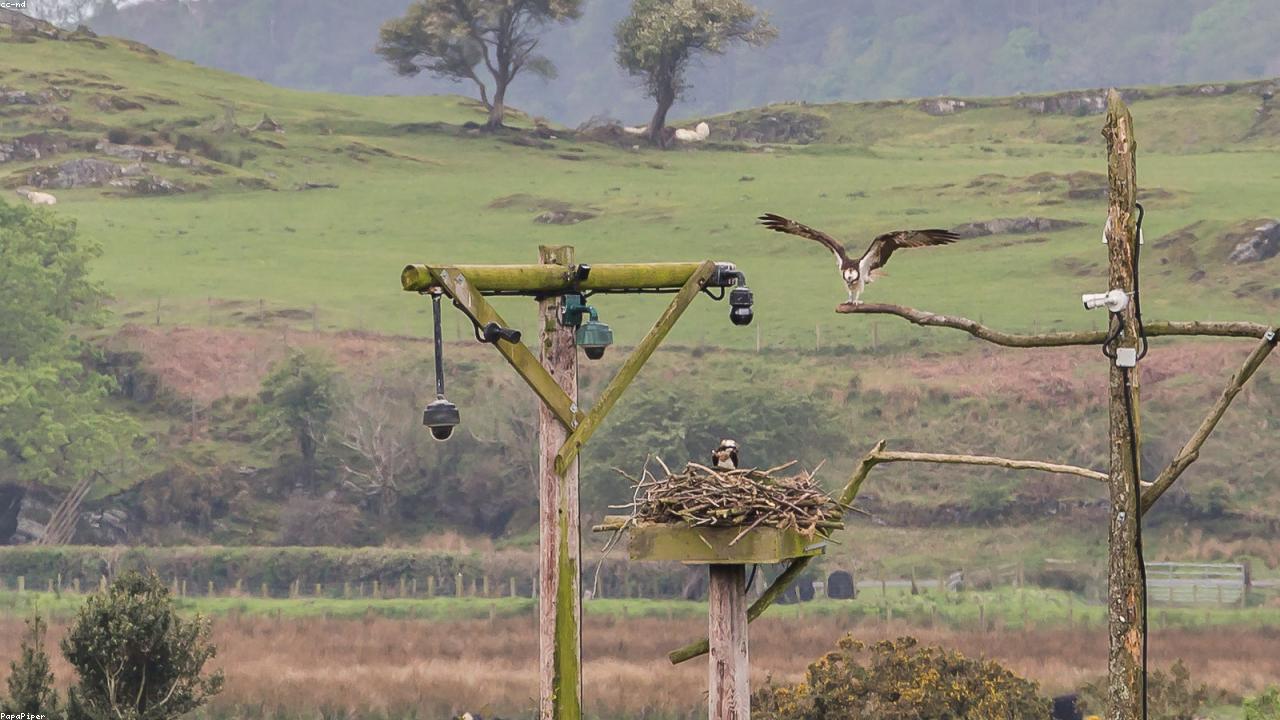
The osprey nest in the forest — occupied annually by a pair that has returned to Eryri as part of a gradual Welsh recolonisation from Scotland — adds a further dimension to summer visits. The nest platform is viewable from a public hide and the birds are regularly seen fishing the Conwy Valley lakes on clear mornings. The summer woodland bird community also includes pied flycatchers in the oak sections and crossbills in the conifers — two species at the limits of their normal Welsh distribution that Gwydyr Forest supports in healthy numbers.
Find it on the map
Frequently asked questions
Gwydyr Forest is a large managed forest covering around 28,000 acres in the Conwy Valley near Betws-y-Coed, managed by Natural Resources Wales. It combines commercial coniferous plantations with areas of retained ancient oak woodland, open heath, and wetland habitat. The forest is named after the nearby Elizabethan mansion of Gwydir Castle and has been continuously managed since the 1920s.
Yes. Gwydyr Forest is one of the key red squirrel conservation areas in North Wales. The forest's management includes active control of grey squirrels, which carry the squirrelpox virus lethal to red squirrels. Red squirrel sightings are most likely in the early morning around the lakesides of Llyn Elsi and Llyn Goddionduon, and in the remnant oak sections of the forest.
Yes. An osprey nest platform in Gwydyr Forest has been active since the early 2000s, part of the natural recolonisation of Wales by ospreys following the long-established Scottish population. The nest site is viewable from a public hide in season. The Glaslyn Ospreys at Beddgelert are the more famous Welsh osprey site, but Gwydyr represents the bird's presence expanding across north Wales.
The forest supports pied flycatchers and redstarts in summer in the ancient oak sections. Crossbills feed on conifer cones in the plantation areas and can appear in flocks at any time of year. Common buzzards and sparrowhawks hunt along the forest edges. Tawny owls call from the denser woodland at night. The forest streams support dippers and grey wagtails year-round.
Yes. Gwydyr Forest has an extensive network of mountain biking trails ranging from straightforward family routes to demanding technical singletrack. The Marin Trail, accessed from Penmachno, is one of the most celebrated mountain bike routes in North Wales. Natural Resources Wales's website lists current trail status and difficulty gradings.
Betws-y-Coed is the main gateway to the forest. Multiple forest tracks and footpaths begin from the village, including the path to Llyn Elsi starting from the village centre (about 45 minutes to the lake). Swallow Falls is on the A5 road two miles west and has its own car park. The Conwy Valley Line railway serves Betws-y-Coed directly from Llandudno Junction.