At a glance
Barmouth is a traditional seaside town on Cardigan Bay at the mouth of the Mawddach Estuary — sandy beach, the wooden railway viaduct with its toll footway, the Mawddach Trail to Dolgellau, and Cadair Idris rising behind. Served by the Cambrian Coast Line railway. A good base for southern Snowdonia, the Rhinog mountains, and the southern Cardigan Bay coast. Traditional in character, with a working harbour and genuine seaside atmosphere.
About Barmouth (Abermaw)
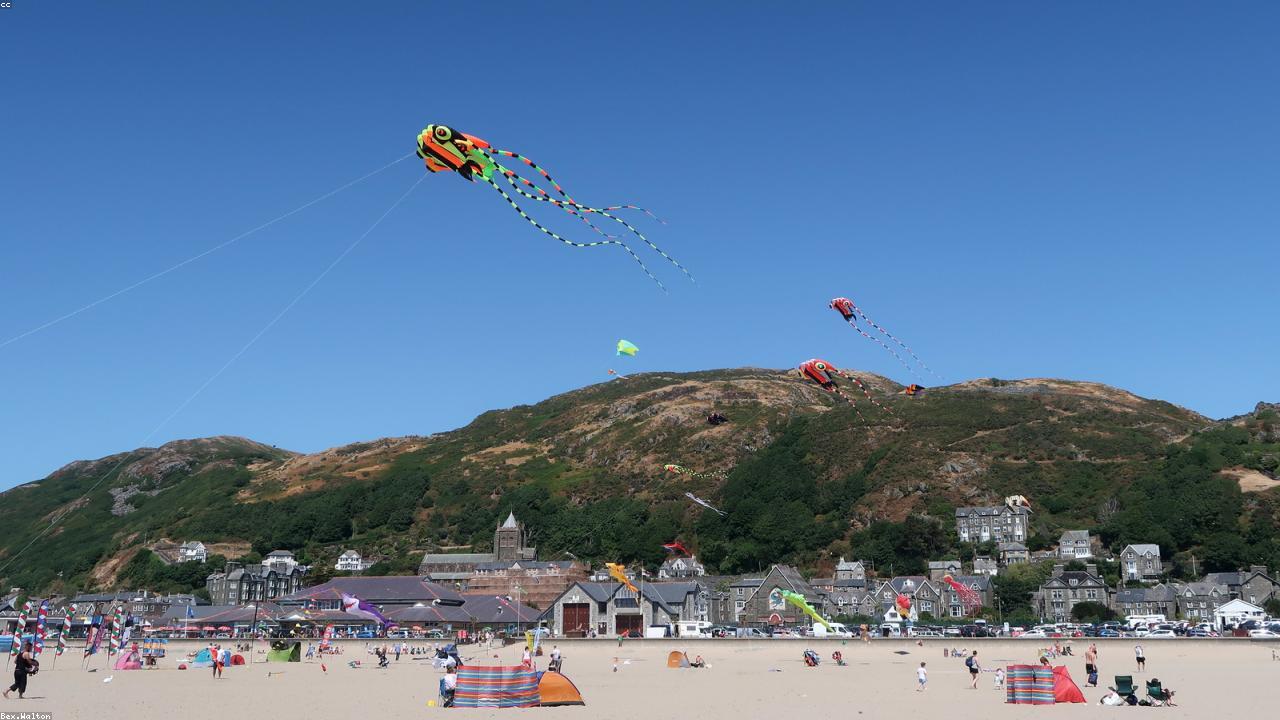
Barmouth sits at the point where the Mawddach — one of the most beautiful estuaries in Wales — meets Cardigan Bay. The town occupies a narrow shelf of land between the sea and the cliffs that rise steeply behind it; the streets climb from the promenade up the cliff face in a compressed vertical arrangement that gives the town a Mediterranean quality of density in a decidedly Atlantic climate. The Cambrian Coast railway arrived in 1867, producing the transformation from fishing village to seaside resort that changed the town's character permanently, though the working harbour and the fishing boats that still use it maintain a connection to the pre-tourist economy.
The viaduct across the Mawddach Estuary is the town's most distinctive feature — a wooden rail and footway structure 820 metres long that has carried the Cambrian Coast Line since 1867 and has survived repeated flooding and storm damage through a combination of regular maintenance and structural good fortune. Walking across it at low tide, with the sandbanks of the estuary exposed and Cadair Idris above the trees on the southern shore, gives a quality of prospect available nowhere else on the Welsh coast. The Mawddach Trail that begins from the south end of the viaduct follows the former Ruabon–Barmouth railway to Dolgellau through landscape of persistent, quiet beauty: ancient oak woodland, open estuary, the shadow of the mountain above.
What to see and do
- Barmouth Beach — long sandy beach on Cardigan Bay with traditional seaside facilities and safe swimming.
- Barmouth Viaduct walk — toll footway across the 820m estuary viaduct to the Mawddach Trail (£1 toll).
- Mawddach Trail — 9-mile flat walking and cycling route to Dolgellau along the estuary.
- Barmouth Harbour — working harbour with boat trips and estuary views.
- Panorama Walk — waymarked walk above the town on the cliffs behind Barmouth; views over the estuary and bay.
- Cadair Idris — major mountain accessible from Dolgellau, 9 miles east.
- Cambrian Coast Railway — scenic rail route north to Harlech and Porthmadog, south to Machynlleth.
Getting to Barmouth
By rail: Cambrian Coast Line from Machynlleth (50 minutes) with connections to Birmingham and Aberystwyth. Northbound to Harlech (25 minutes), Porthmadog (50 minutes), and Pwllheli (75 minutes). Services are less frequent than main-line routes — check timetable before travel.
By road: A496 from Harlech (10 miles north) or Dolgellau via A496 (9 miles east). From the A470 at Dolgellau, the A496 leads west to Barmouth through the Mawddach gorge. From Birmingham: A458 to Welshpool, A470 to Dolgellau, A496 — approximately 100 miles, 2 hours.
Parking: Several seafront and harbour car parks; pay-and-display. The town centre is compact and walkable once parked.
Find it on the map
Frequently asked questions
Barmouth (<span lang="cy">Abermaw</span> in Welsh) is known for its sandy beach on Cardigan Bay, the Barmouth Viaduct — a wooden railway viaduct carrying the Cambrian Coast Line across the Mawddach Estuary — and the dramatic setting between the sea and the mountains. Cadair Idris, one of the great Welsh mountains at 893 metres, rises directly behind the town and is accessible by several routes from nearby Dolgellau. The town retains traditional seaside character with fish and chip shops, amusements, and a working harbour.
Yes. The Barmouth Viaduct carries both the Cambrian Coast Line railway and a footway across the Mawddach Estuary — a toll footbridge (small charge, usually £1) providing access to the Mawddach Trail on the southern shore. The trail follows the former railway line along the estuary to Dolgellau — a 9-mile flat walk or cycle route with exceptional views of the estuary and the Cadair Idris ridge above. The viaduct walk and the first section of the Mawddach Trail are among the finest short walks in southern Snowdonia.
Barmouth is served by the Cambrian Coast Line railway with services to Machynlleth (1 hour) and connections to Aberystwyth and Birmingham. Northbound services run to Pwllheli via Harlech and Porthmadog. By road, the A496 connects to Harlech (10 miles north) and Dolgellau (9 miles east). From the A470 (the main north-south Wales road): turn west at Dolgellau on the A496. From Birmingham: A458 to Welshpool, A470 north to Dolgellau, A496 west — approximately 100 miles, 2 hours.
Yes. Barmouth has a long sandy beach with traditional seaside facilities, safe swimming conditions in most weather, and a working harbour with boat trips available in season. The Barmouth Viaduct walk to the Mawddach Trail suits families with children old enough to walk 2–3 miles. The town has amusement arcades, fish and chip shops, and ice cream establishments in quantity. The train journey along the Cambrian Coast to Harlech (for the castle) or Porthmadog (for the Ffestiniog Railway) makes a good half-day addition.
The Mawddach Trail is a 9-mile walking and cycling route along the southern shore of the Mawddach Estuary from Barmouth to Dolgellau, following the trackbed of the former Ruabon–Barmouth railway closed in 1965. The trail is flat throughout, surfaced for cycling, and passes through ancient sessile oak woodland, estuary salt marsh, and alongside the tidal river with views to the Cadair Idris massif above. It is one of the finest accessible trail routes in southern Snowdonia and is suitable for all levels of fitness including families with bikes.
Cadair Idris (893 metres) — one of the great Welsh mountains — is accessible from Dolgellau, 9 miles east of Barmouth. The Pony Path from Dolgellau and the Minffordd Path from Tal-y-Llyn are the main ascent routes. The Rhinog mountains, north of Barmouth beyond Harlech, are wild, rocky, and less frequented than Cadair Idris — the Rhinog Fawr and Rhinog Fach traverse is a challenging day for experienced walkers. Diffwys and the Llethr ridge east of Barmouth can be accessed directly from the town.