At a glance
Llangollen Railway — a 10-mile preserved steam railway through the wooded Dee Valley gorge from Llangollen (LL20 8SN) to Corwen, with stops at Berwyn (Horseshoe Falls), Glyndyfrdwy, and Carrog. Adult from £18 · Child from £9. Runs weekends year-round, daily June–August. Dogs welcome. UNESCO World Heritage Site corridor.
About Llangollen Railway
The Llangollen Railway runs through one of the most beautiful river valleys in North Wales — the Dyffryn Dyfrdwy (Dee Valley), a limestone gorge where the Afon Dyfrdwy (River Dee) runs swift and clear between wooded cliffs. The 10-mile route from Llangollen to Corwen follows the southern bank of the river, with the train weaving between the water and the steep wooded valley sides, crossing the occasional viaduct and passing through the quiet stations at Berwyn, Glyndyfrdwy, and Carrog.
The railway operates on part of the former Great Western Railway Ruabon–Barmouth line, closed by British Railways in 1965. Preservation began in the 1970s and the line was restored progressively: to Glyndyfrdwy in 1992, Carrog in 1996, and finally to a rebuilt Corwen station in 2014 — 50 years after closure. The railway is operated entirely by volunteers and is one of the larger heritage standard-gauge railways in Wales.
The Dee Valley corridor passed through by the train was inscribed as a UNESCO World Heritage Site in 2009 (as part of the Pontcysyllte Aqueduct and Canal World Heritage Site) — the broader landscape of the canal, the aqueduct, and the Dee Valley is the setting for the railway's western section. Berwyn Station, the first stop, is a short walk from the spectacular Horseshoe Falls — Thomas Telford's curved weir that feeds the Llangollen Canal.
Find it on the map
Frequently asked questions
The full journey from Llangollen to Corwen is approximately 10 miles and takes about 1 hour in each direction. Intermediate stations at Berwyn (1.5 miles from Llangollen — with Horseshoe Falls nearby), Glyndyfrdwy (5.5 miles), and Carrog (7.5 miles) can be joined or left at. A return trip from Llangollen to Corwen and back takes approximately 2.5–3 hours including turn-around time at Corwen — ideal for a half-day. Alternatively, passengers can alight at one of the intermediate stations and walk part of the valley before rejoining a later train.
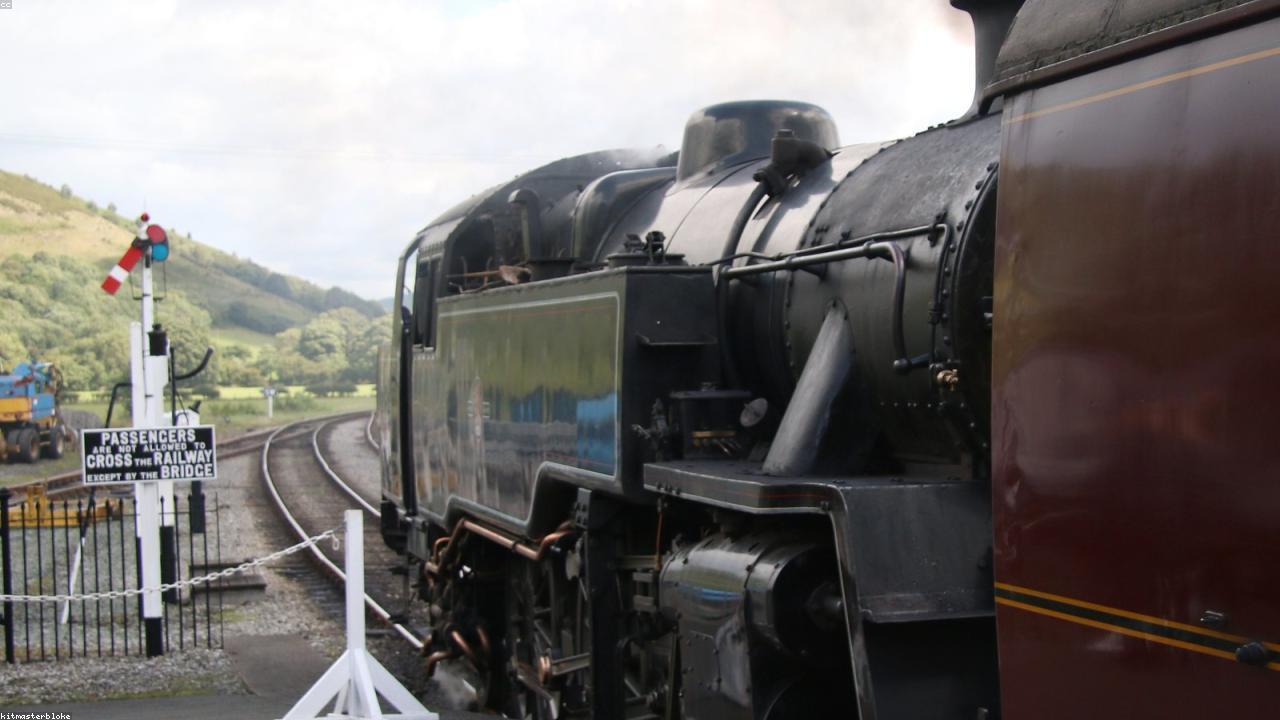
The Llangollen Railway operates a fleet of preserved steam locomotives alongside diesel traction. Steam engines include examples of GWR (Great Western Railway), LMS (London Midland and Scottish), and LNER (London and North Eastern Railway) types — ranging from tank engines to express passenger locomotives. The railway also operates diesel multiple units on some services. The exact locomotives in service vary by year and maintenance schedule. Special event days throughout the year feature visiting locomotives, galas, and Thomas the Tank Engine events. The railway's website (llangollen-railway.co.uk) lists current motive power.
Yes — Berwyn Station (the first stop, 1.5 miles from Llangollen) is the closest station to Horseshoe Falls (a 10-minute walk), where the Llangollen Canal begins. The canal towpath can be walked back to Llangollen alongside the narrow gauge railway. Glyndyfrdwy Station (5.5 miles from Llangollen) is in the village associated with Owain Glyndŵr — Wales's last native Prince. Carrog is a quiet village with a pub (the Grouse Inn). Corwen, the terminus, is a small market town with connections to Owain Glyndŵr and a new statue in the town square. The Dee Valley between Llangollen and Corwen has walking paths alongside the river — the train provides a useful way of making a linear walk without returning to the start.
The Llangollen Railway is well-suited to families. The journey through the wooded Dee Valley is scenic and engaging, with the steam locomotive visible from many carriages. Children can usually visit the footplate at stations (ask station staff). The railway runs Thomas the Tank Engine events and Santa Specials that are popular with young families. The journey is not too long (1 hour each way), and Llangollen itself has good cafés, the canal, and Dinas Brân castle (a short but steep climb) to explore before or after the train. Dogs are welcome on trains on leads.
The Llangollen Railway runs on part of the former Great Western Railway Ruabon–Barmouth line, which opened in 1865 and ran from Ruabon (near Wrexham) through Llangollen, Corwen, Bala, and Dolgellau to Barmouth on the Cardigan Bay coast — a scenic trans-Wales route crossing the mountains. British Railways closed the entire Ruabon–Barmouth line in January 1965 as part of the Beeching cuts. The preserved Llangollen Railway reopened the Llangollen section progressively: Llangollen to Glyndyfrdwy in 1992, to Carrog in 1996, and through to Corwen in 2014 — the first new station on the national network at Corwen since the closure. The reopening to Corwen represented 50 years of work by the railway's volunteers.